www.ivomilan.it

   IVO MILAN – Radical Fashion Blog

Archive
Marchi

After a long absence, a grand return. 
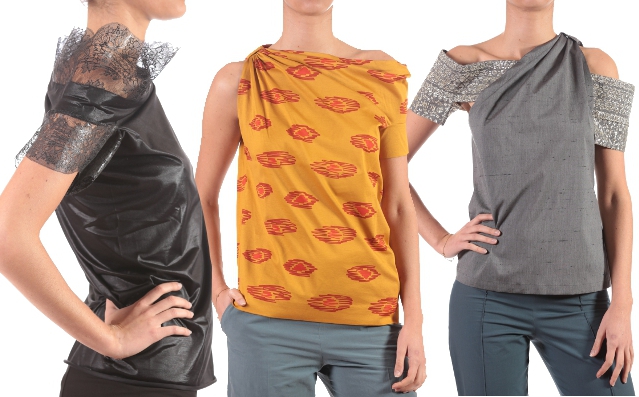
XII XII XLIX (12/12/49), birth date of the great Italian designer, marks the riappropriation of the brand after a long controversy.

Today’s collection is completely designed and carried out by Romeo Gigli himself. The designer was a striking discovery in the history of Italian fashion, that in the mid-Eighties was dominated by an androgynous female style, wrapped in the geometrical and sharp Armani‘s suits.

Gigli was able to astonish, by proposing an opposite model. Whereas the female manager was celebrated, in a latent competition with her partner, Gigli made an ancestral, ethereal woman flourish again, dressed in a vaguely Renaissance-style items. A powerful tribute to the woman’s gracefully sensual body and identity. By doing so, he made a revolution that, at least in the world of fashion, was able to sweep the misunderstood struggle of sexes away, that tried to standardize different personalities.

Even if it is not so vast and elaborate as Gigli’s past collections used to be, the Summer collection is nevertheless inspired by the same spirit. Soft jersey, knots, juxtapositions, bare shoulders, and slightly asymmetrical silk works, show colours that range between the warm density of ochre and orange and the metallic concentration of black, grey and blue, and are new examples of Romeo Gigli’s typical woman.

By looking at the different items of clothing of this collection, nostalgic memories are awaken of a period when Italian fashion was in the centre of the international fashion scene.

Read More
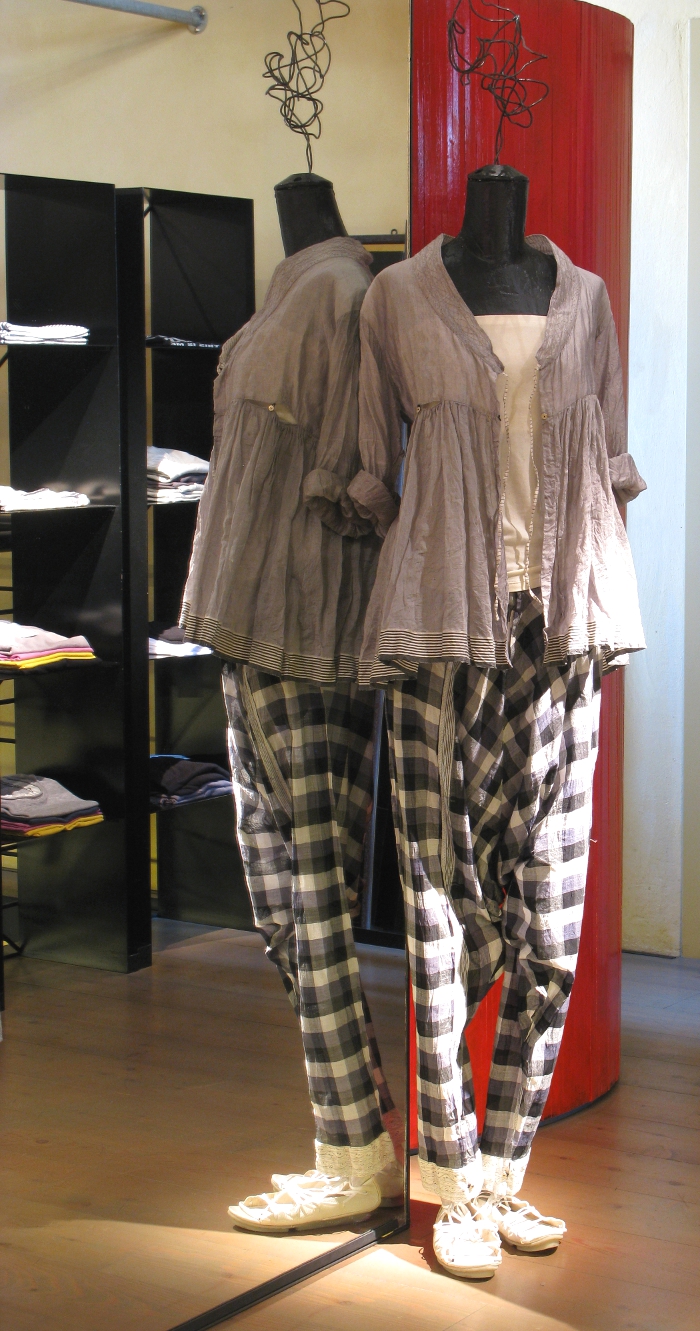
Vlas Blomme, in Flemish, means “The flax flower”. This is a clear tribute to Flanders, the world’s capital of the production and manufacture of this valuable fibre, and also a tribute to flax, the material of the entire summer collection.

Designed by the Japanese Satoshi Ishii, the brand uses the precious material from Kortrijk, one of the most important places for flax production in Belgium, to give shape to a simple selection of items of clothing, specifically designed to enhance the material’s potentials.

The design infact proposes a perfect and surprising union of shape and fabric. The suggestions of the vast Flemish plains are evoked and recalled through the colours and patterns. They talk about skies, trees and country life, that is rural and light-hearted at the same time. The evident ability to give shape to materials, however, goes beyond the common, ordinary shapes of isolated, rural lives. The lines run with the wind, juxtapose and create uncertain outlines.

A deep care and an evident love for the fabrics can be seen on collars and shoulders, where convolute forms are created that are still very sober.

Vlas Blomme follows a path that indulges in environmental subjects, working on the qualities of the best natural fibre, and above all being able to test its brand new, fresh, lyrical possibilities.

Read More

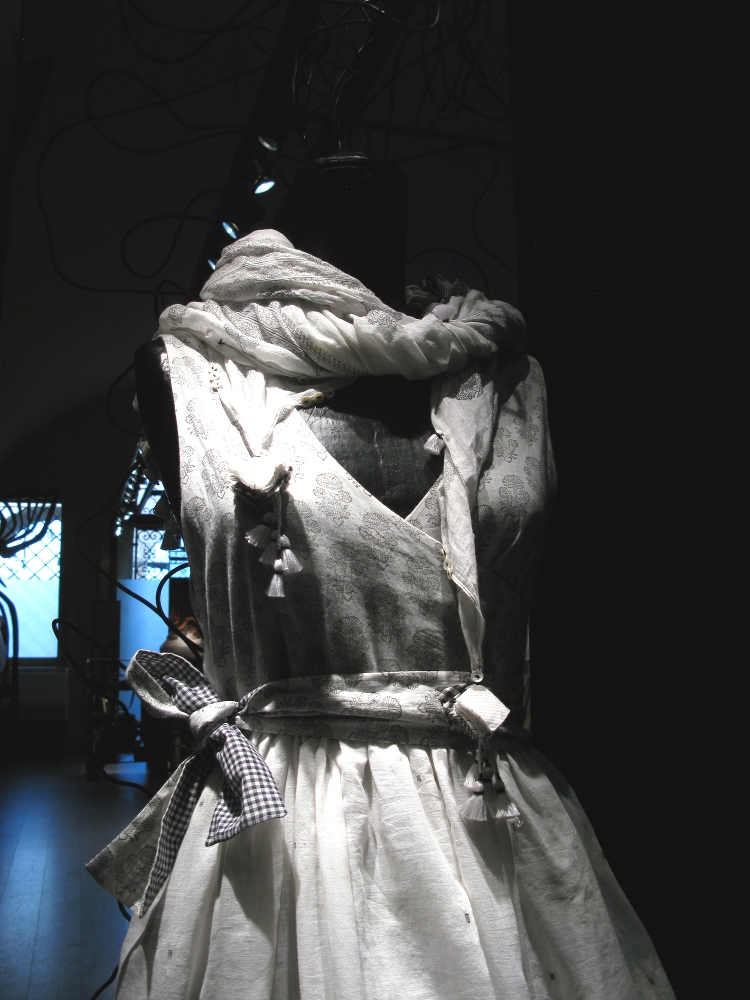
After she finished the National Institute of Design and Technology at Ahmedabad, Aneet Arora started signing her own brand with the name Péro, that in Marwari, one of the languages of Rajasthan, means “to wear”.

Péro outfit

In producing her clothes and fabrics, Aneet moves from the steady belief that the new trends can be found amongst the colours, matches and style of local people, who are to be considered the actual trendsetters of modern time.

She believes that it is pointless to follow the change of fashion with the seasons; it’s much better to work out and be inspired by the rich natural world that surrounds us everyday.

In her case, the surrounding world is the very vast Indian subcontinent, an endless galaxy of cultures that have been living side by side for centuries, testing and exchanging incredible skills in terms of fabrics and colours.


Péro takes her inspiration from these ancient local traditions, and creates items that are extremely complex from a technical point of view, where colours and materials take their shape at the same time, being patiently knitted by the loom. Precious, high quality cotton and silk are used that give every piece a great value, whilst the handmade production  makes every item of clothing unique, far from any industrial series production. Péro

The patterns can be knitted by the loom or created using small handmade wooden stamps, and tiny details, such as buttons, reveal to be made of precious silver.

Detail Péro

Detail Péro
The large and comfortable lines show Aneet’s peculiar ability to integrate a clearly ethnic inspiration with modern, cosmopolitan elements, that are outlined by the frequent use of asymmetric patterns and light juxtapositions.

In this global era, Péro proposes unquestionably interesting and original clothes, but first of all represents an excellent example of refined contaminations that are not to be missed.

Read More

Sacai
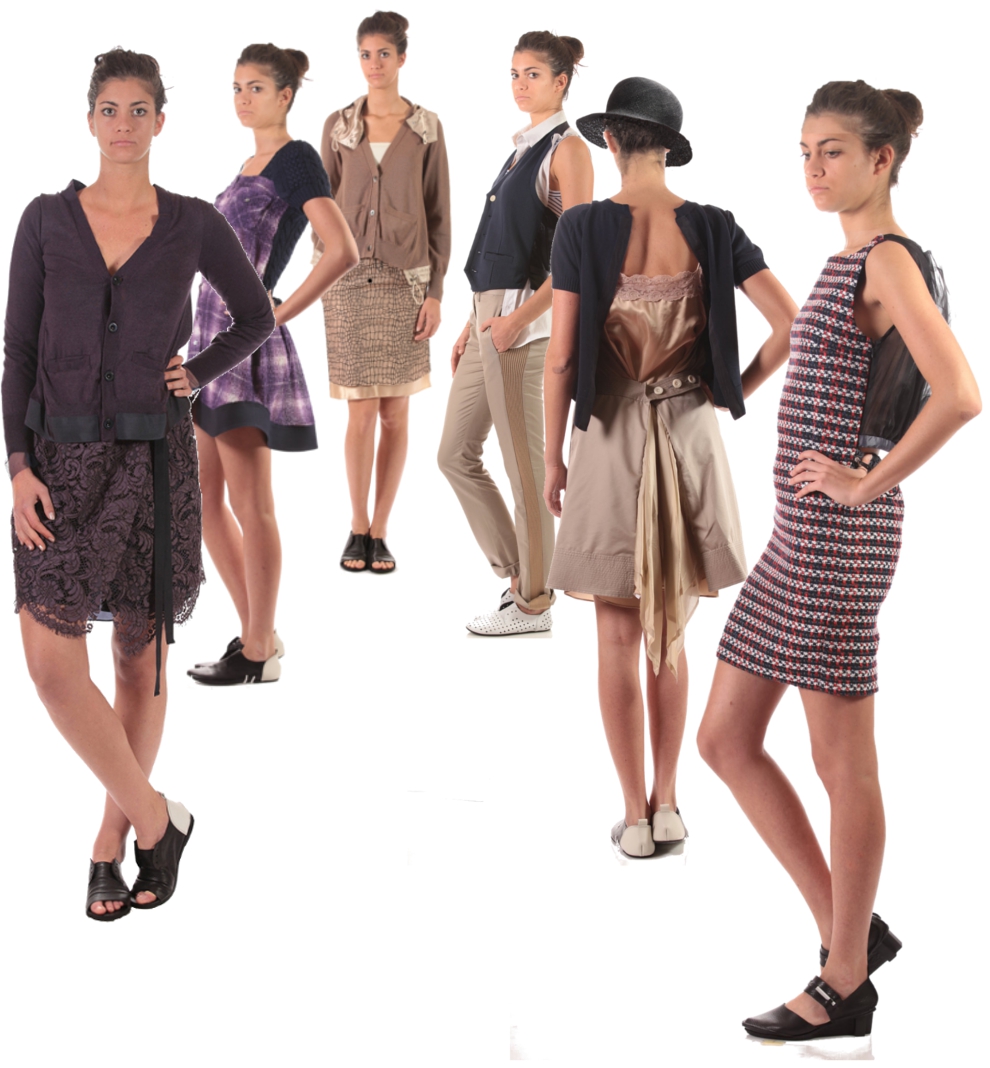
Despite having worked with Junya Watanabe and Rei Kawakubo for nearly a decade, Abe Chitose, the young designer of the Sacai brand, was able to distance himself from his illustrious masters and develop an original and personal interpretation of fashion and clothing.

Whilst the so-called Japanese school is more inclined to look at the artistic potential of clothing, Chitose brings it back to its original function of items that must adapt and be compatible with the various needs of everyday life. This absolutely concrete and practical dimension underlines the spaces and times of our social life and tries to find a solution for different circumstances. For this purpose, Chitose employs the classic formal schemes of ordinary, mainly Western clothing, but does not renounce the process of dividing it up and putting it back together, by applying the poetic delicacy that he acquired in his work environment.

In this original mixture of East and West, sheath dresses can be found, along with trench coats, blazers and also an explicit tribute to Chanel, that at the same time is a celebration of an eternal feminine, of an original elegance.

Without being trapped by boring and regular monotony, Sacai breaks the rhythm by introducing carefully chosen devices that systematically betray what our eyes were expecting: rough juxtapositions of fabrics; simple points of junctions between different prints and materials; unexpected gatherings or layers that are camouflaged by the apparent predictability of the forms.

In the delicate balance between innovation and repetition, what prevails is an impeccable, refined and essential female silhouette.

Read More

Issey Miyake
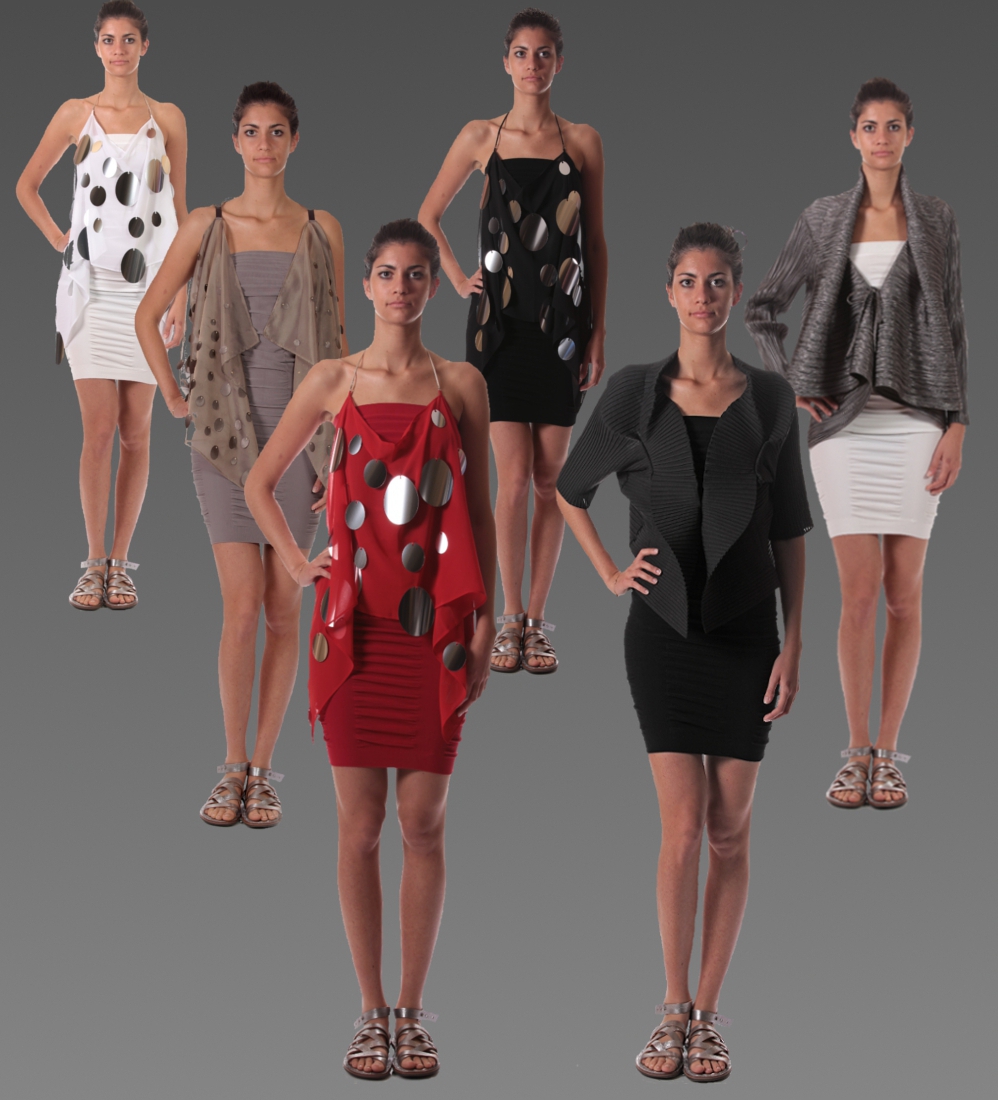
Issey Miyake’s art and vision can be defined in two short words: light and joy.

His garments are a feast for the eyes and the soul, and attract, amaze and surprise even an audience that is indifferent to the fashion world but is simply vulnerable to beauty.

The very famous Japanese maison created pieces that found a place in the most important modern art galleries, with their futuristic, revolutionary technology. Any shape can be devised, any shade of colour made real, without ever oppressing the human inclination towards harmony.

Miyake does not ask anyone to make an effort to understand his work, because all of us would like to have created what he has created.

The art-garment is expression and results from a powerful freedom of thought, that is emancipated from the constraints of the limited possibilities offered by the materials. The technique is able to set the matter free from its objective limits, and the matter itself, the fabric, can become subject to manipulation, can be moulded and modeled solely depending on the artist’s creativity.

Issey Miyake is not a designer, he is a genius who brought art into everyday life, enabling people to wear it. Be it a spectacular piece, or a more reasonable and sober item of clothing, it is always the same creation of a genius, because the fabric, its primary element, was treated in such a way as to make it unique.

Every collection shows structures and colours in their infinite expressive possibilities, in order to give way to charm and wonder in our lives. This is an incredibly generous creative gesture.

Read More