www.ivomilan.it

   IVO MILAN – Radical Fashion Blog

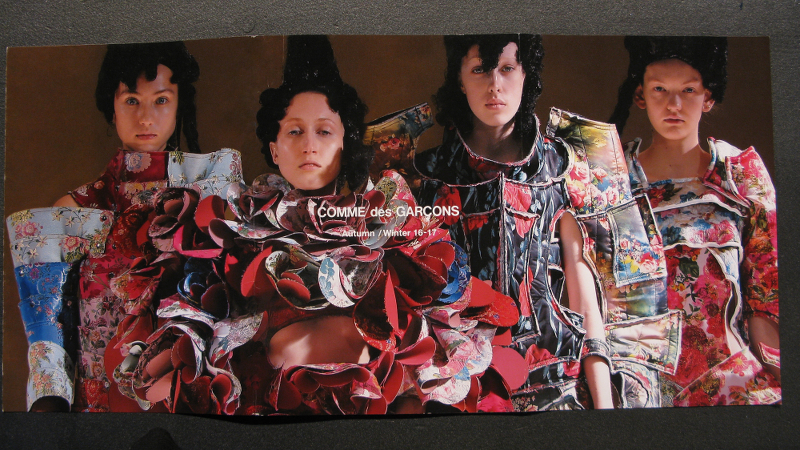
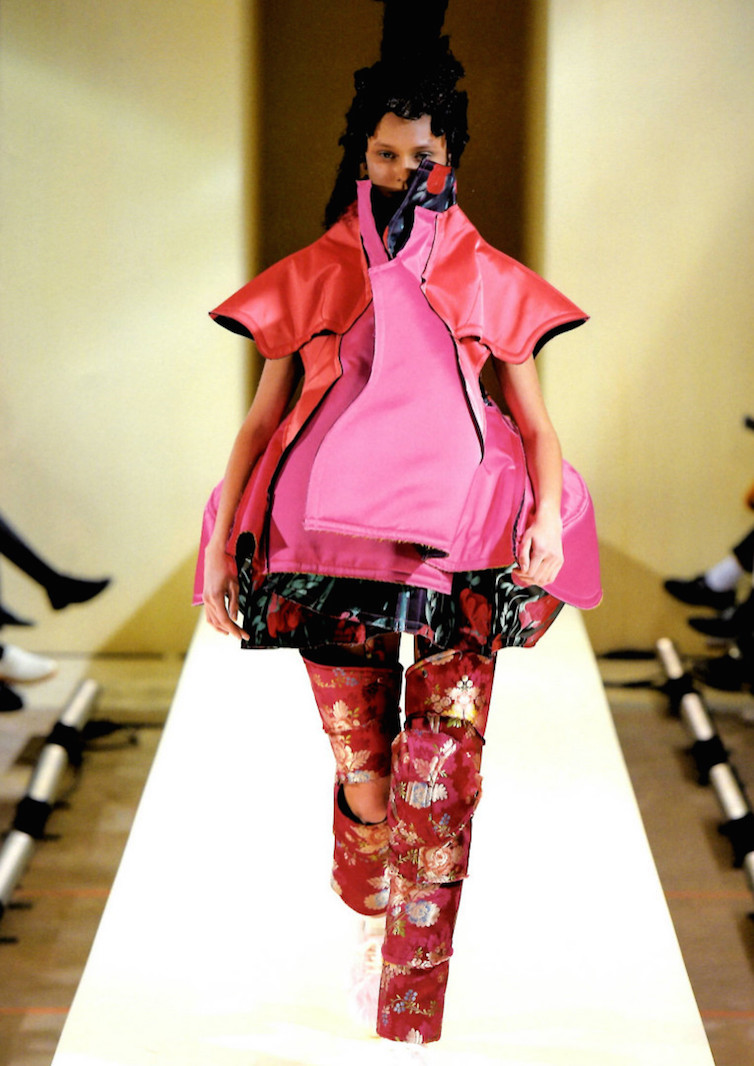
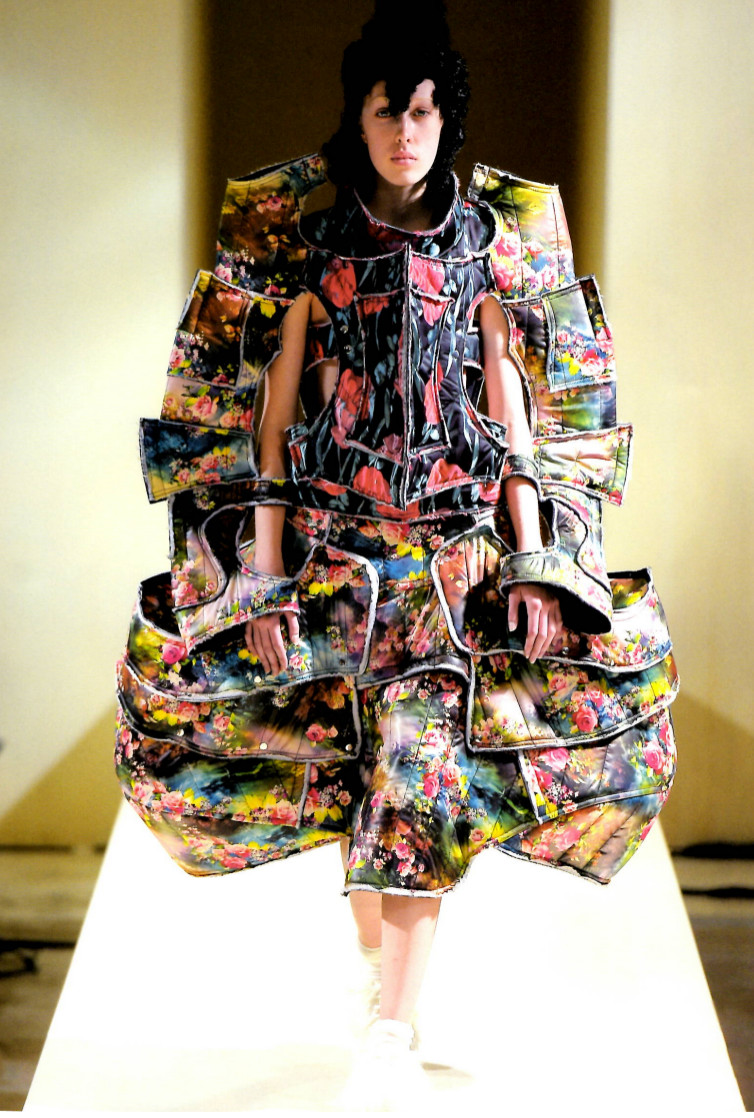
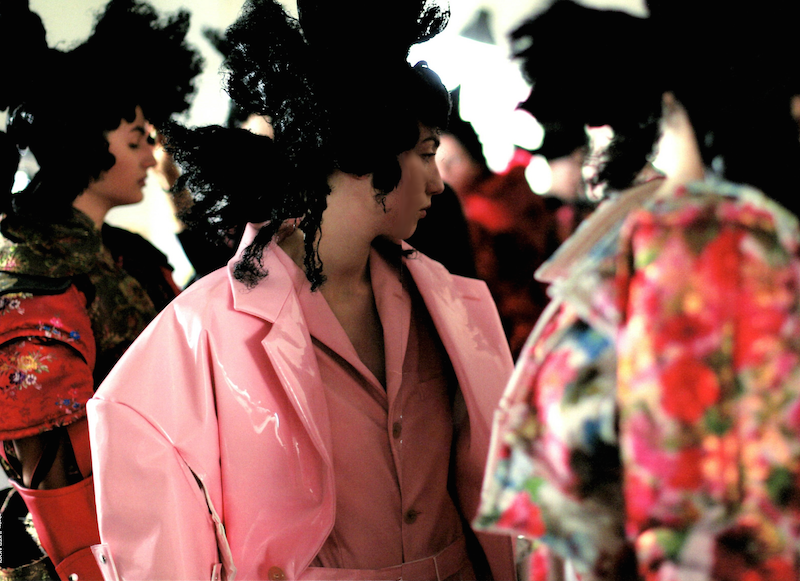
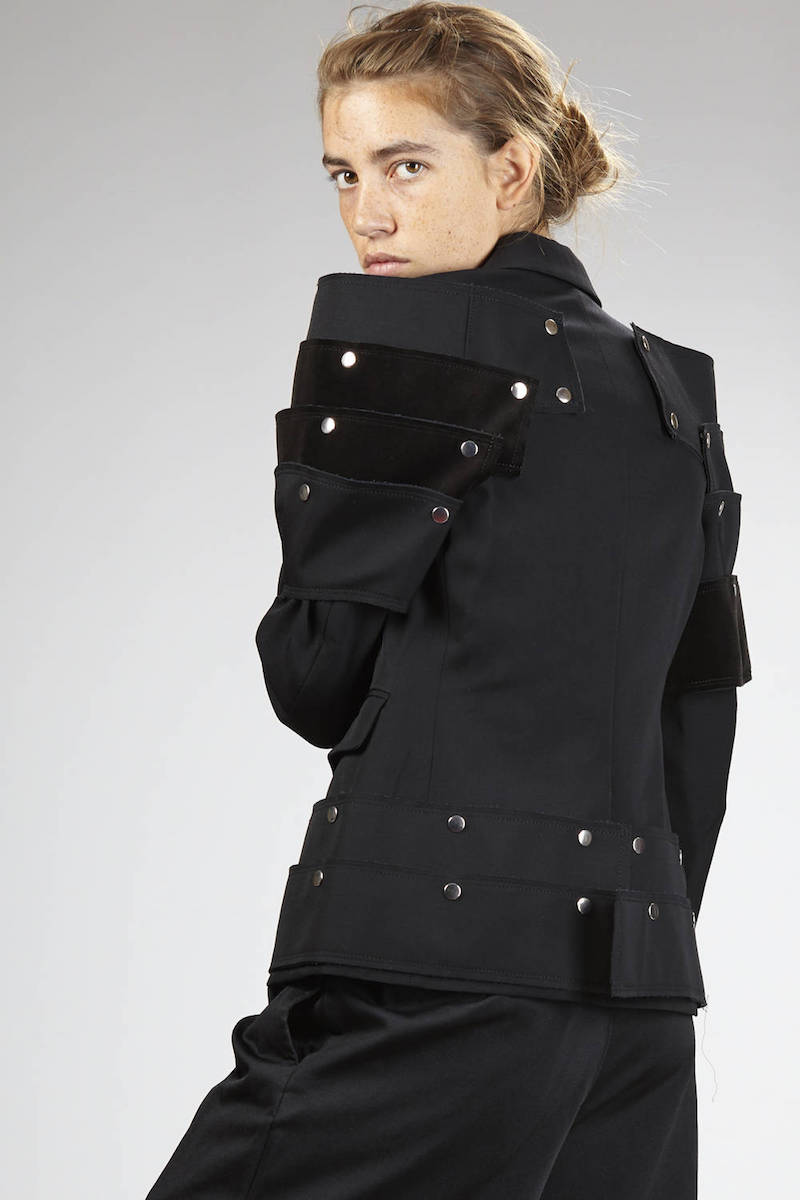
For several years now Rei Kawakubo, in Comme des Garçons art, has exclusively dedicated to clues, atmospheres and evocation her own representation of the ongoing collection. Emancipated of any kind of obligation towards the expectations of the global audience, the Japanese designer delights with her exhibitions that are closer to the art world rather than the sector of belonging.  The runway is not dedicated to garments but to textile provocations, architectonic structures that surround the sacrificed bodies of models lend to carry oversized sculptures, deliberately cumbersome and disproportionate compared to the available space.

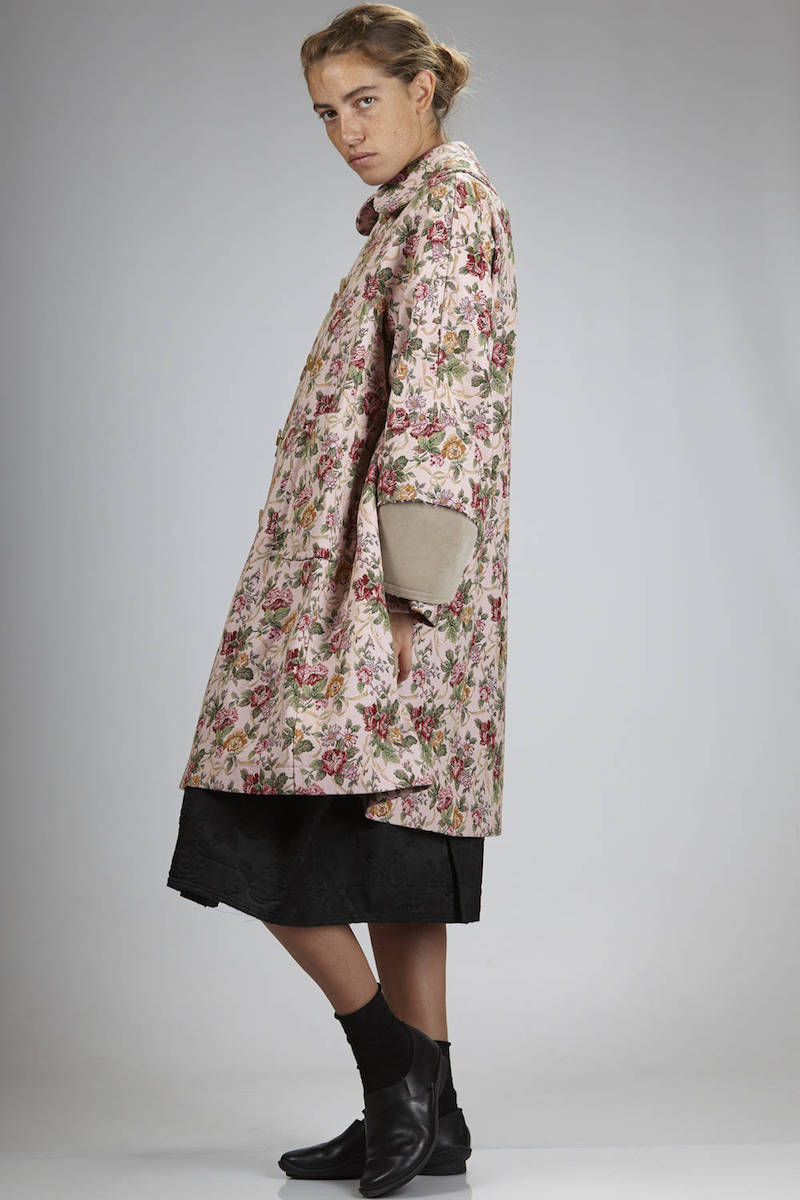
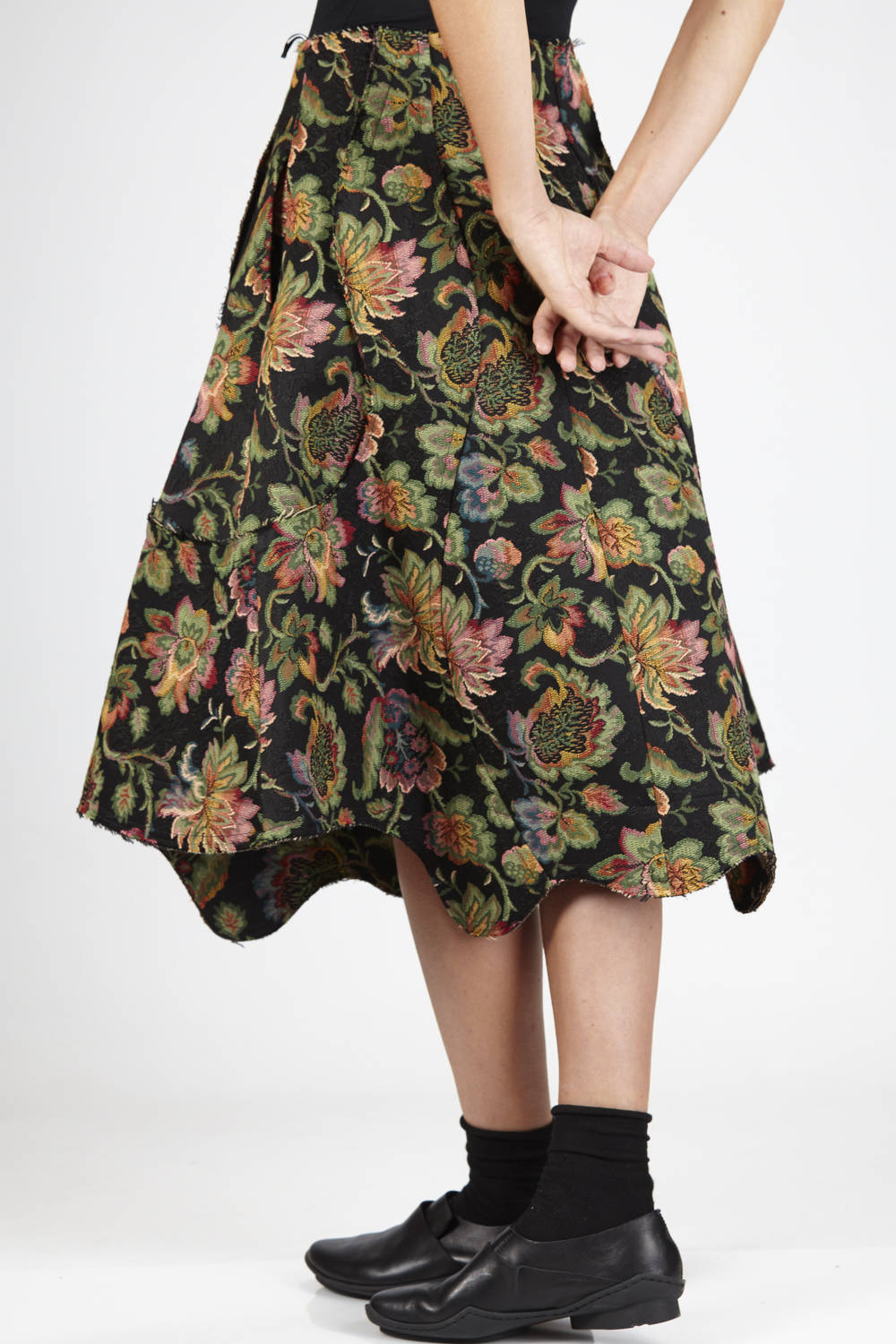
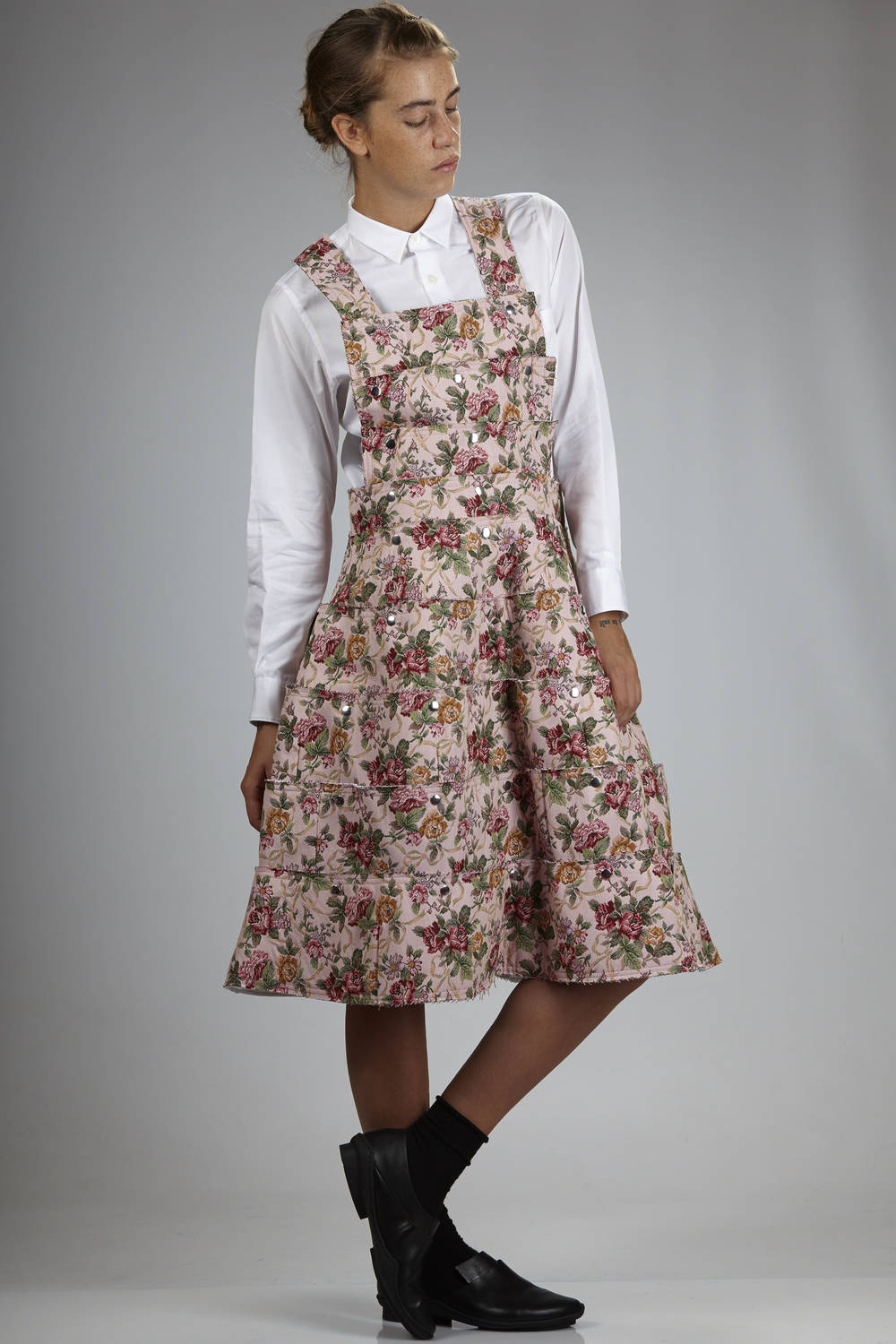
Impossible not to ask yourself why or what is the plausible message content in this artistic drift. Maybe a self-granted freedom of expression, against the monotonous limits forced by the reality of the female body, or a subtle provocation versus a star-system hat becomes increasingly uncritical and exhibitionist. Certainly the dialog has not the purpose of selling. The pared garments are indeed extraordinary pieces of contemporary art that belong in museums or wealthy collectors. The runway show is an idea, a suggestion of the inspiring motif of the season which will be found later translated and much wearable in the development in the show-room. For Autumn/Winter 2016-2017 we witness then poetic collage of antique fabrics, floral tapestries that catapult the public in the XVIII century, the Age of Enlightenment, the rematch of reason over ignorance and superstition.

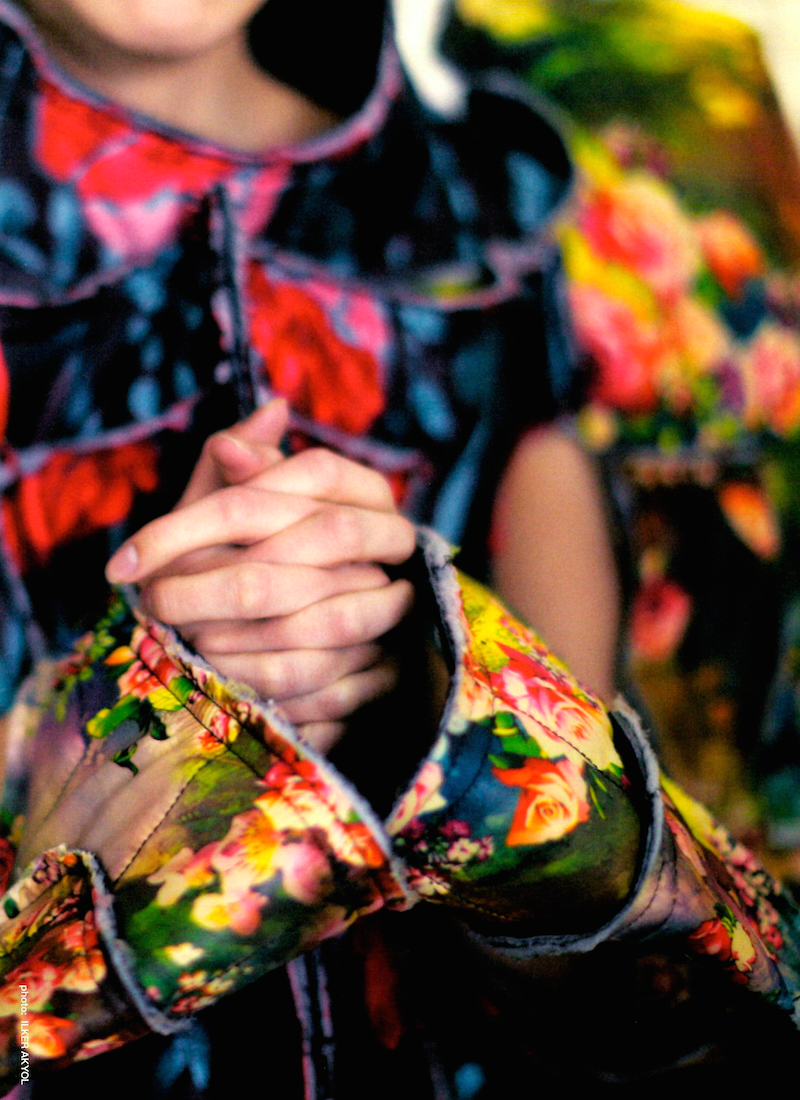
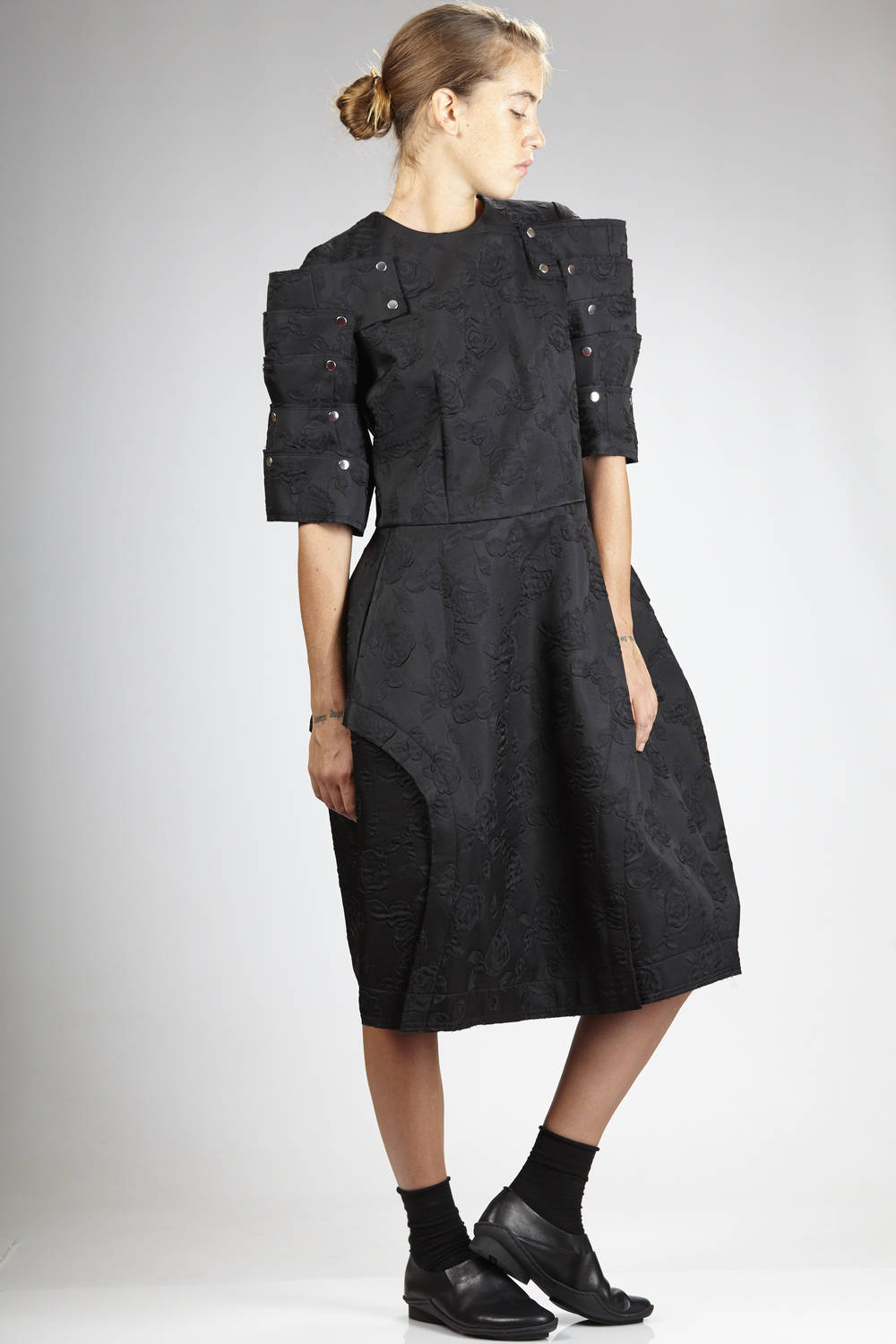
Rei Kawakubo, however, is not nostalgic and well-mannered, the collage is held together by metal snap buttons, by cuts and raw seams, diagonals that fragment the decorative harmony of time, implying elements defined by herself  as Punk, in the most provocative meaning of the term.

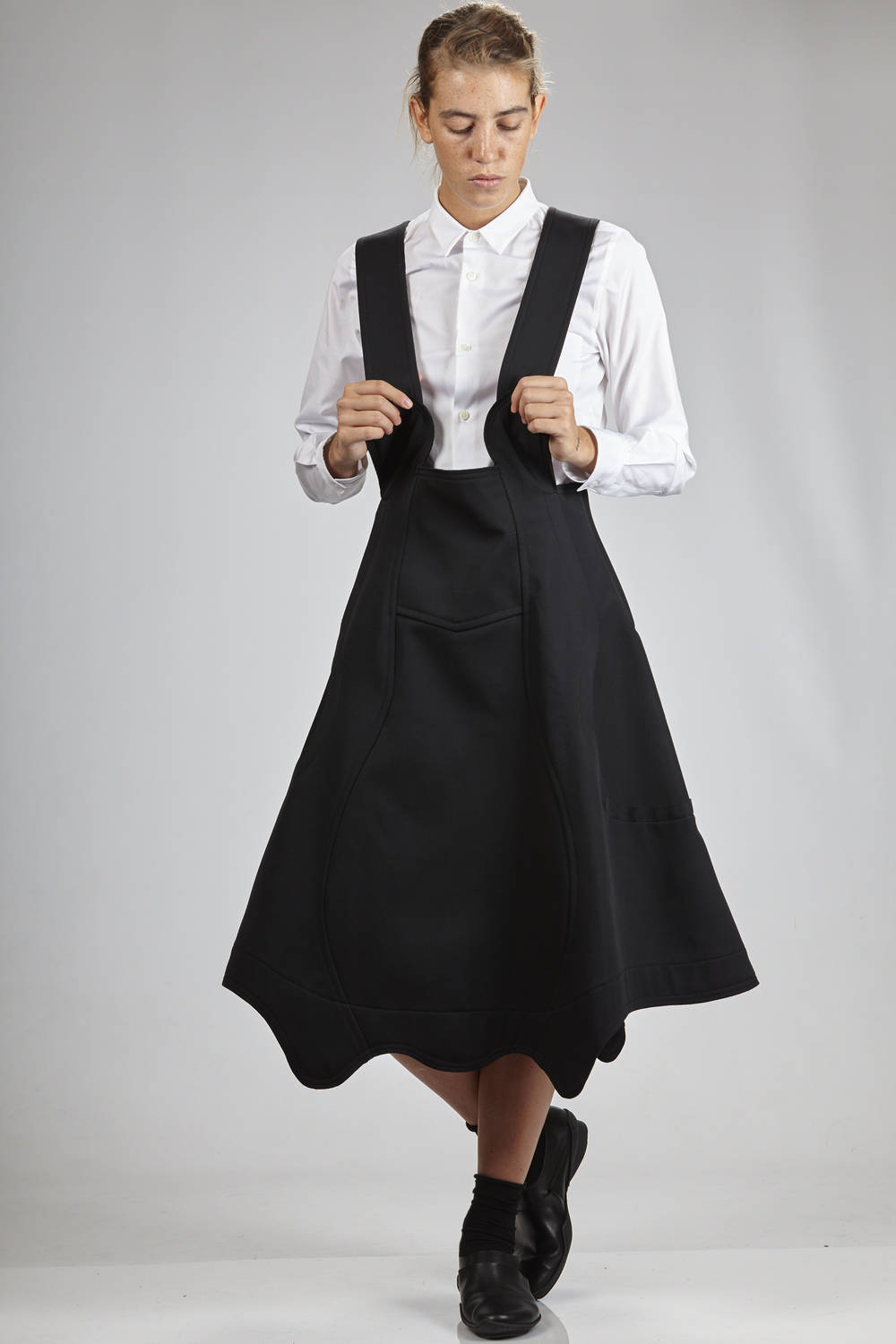
Synthetic leather, studs, constant asymmetries  and details that can be observed in the motives sewed on skirts, in the curvatures of the nodal points of the joints, reinforced as if they were textile armatures. And extensions, adjustable connecting rings, a flexibility in disassembling and reassembling, a continuously adjustable area in lengths and a delicate balance between order and disorder. It is not said that we can return to the original reconstruction, that many the alternatives are. Modernity and tradition, they also alternate in the processing, the ancient Japanese knowing collaborates with the most daring experimentations of the multi-layerd polyester cloth with rayon, cupro and cotton panels, in an encounter that observes how the material determinants and imposes the final shape of the piece, whether is a jacket, skirt or coat.

Needless to assume how Rei Kawakubo, in preparing an original and personal temporal syncretism, punk and Enlightenment, thinks of women determined to stay in their own time with the vigor and exuberance of who has a critical and imaginative independency

Read More
In the middle of the new Fall season, it’s a pleasure to return and to guide you in the discovery of the collections that gives form to our seasonal catalog. Returning to the good practice of introducing the new arrivals, we are starting with a new entry, the Swiss-Italian designer:

Elisa Wild

In absolute world preview, her work is hosted inside of our two places of belonging: online and in the Padua shop.

Elisa Wild stands out not only in the textile production, she also involves us in a detailed narration of her work and in the path that led her to be make clothes. With her own words…

This adventure began, as is often the case, with a passion: a passion for textiles and the chance to work and shape them in the same way as sculpting a raw material. It was essential to make the materials and techniques in the project compatible, since every fabric responds to handling in a different way.

For many years, I have worked continuously on researching, studying and experimenting, in order to stimulate and inspire the design departments of the stars of the fashion world with sophisticated ways of working with textiles. But only now, with these dresses, has the dream that I have always harbored throughout my career come true: managing the entire creative, conceptual and technical process myself, right through to the finished product.

The project has therefore become a system in which the chosen fabric, the specific production methods and the entire process of constructing the object/garment merge to produce unusual, wearable effects. Finally, the ‘textile constructions’ for which we are known in the fashion world have become the dresses I have always dreamed of, as if the thoughts, ideas, whims and sketches in my myriad of notebooks found the right moment and means to take shape. Our workshop has left no stone unturned in researching and testing artisan techniques in its quest to achieve special effects with fabrics.


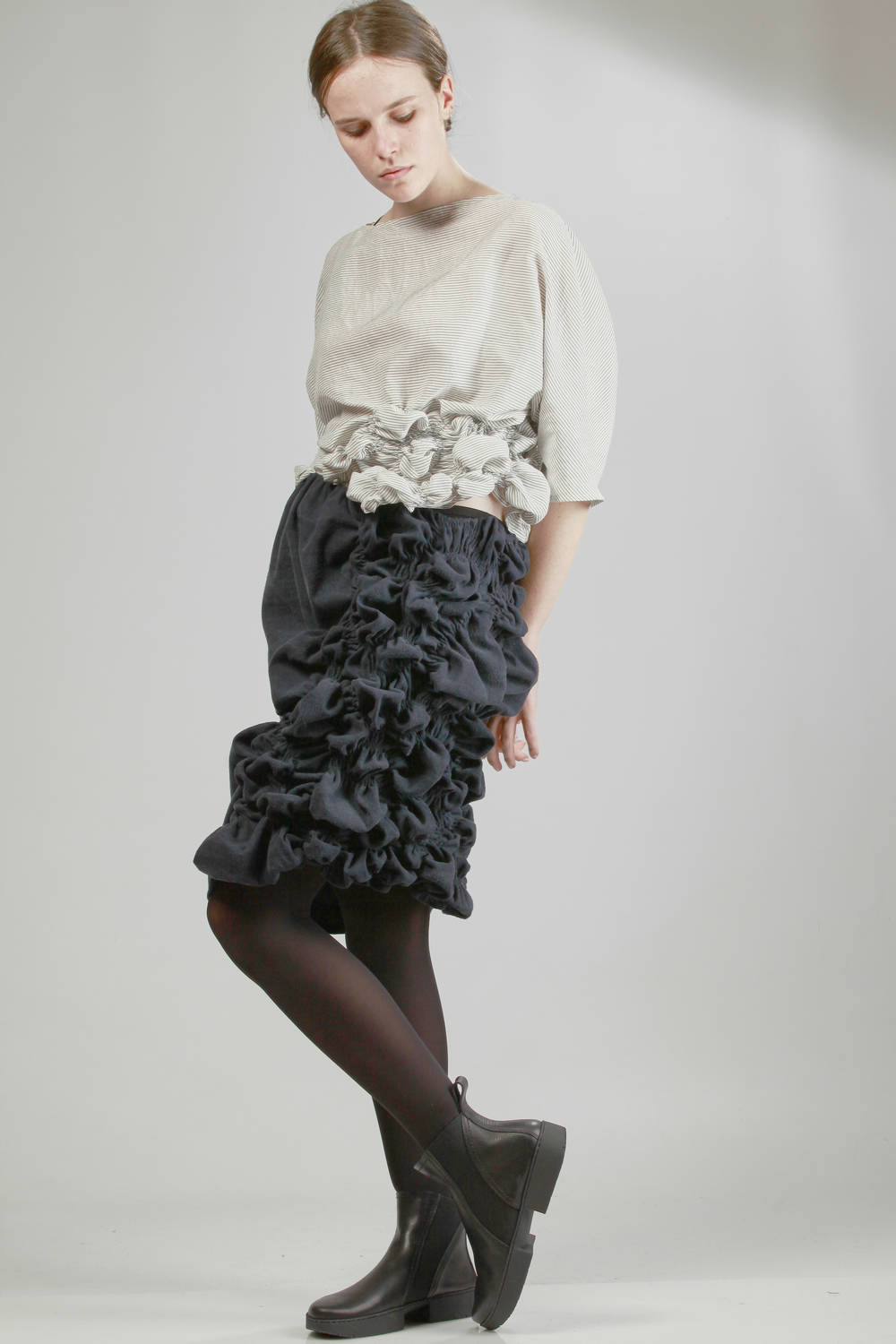
The BOLLE DRESS (bubble) owes its shape to a specific, extremely irregular hand-drawn design, which takes into account how the fabric will move as its form is reshaped by elastic. It is entirely handmade, and to a certain extent it is an empirical work… mass producing a process like this would certainly be a complex challenge to any manufacturer.

Those admiring the final garment may not appreciate how delicate the balance is between the effect produced by the shape of the dress and how it is made. This equilibrium stems from a careful study of the designs, proportions and procedures to create an item that epitomizes haute couture.

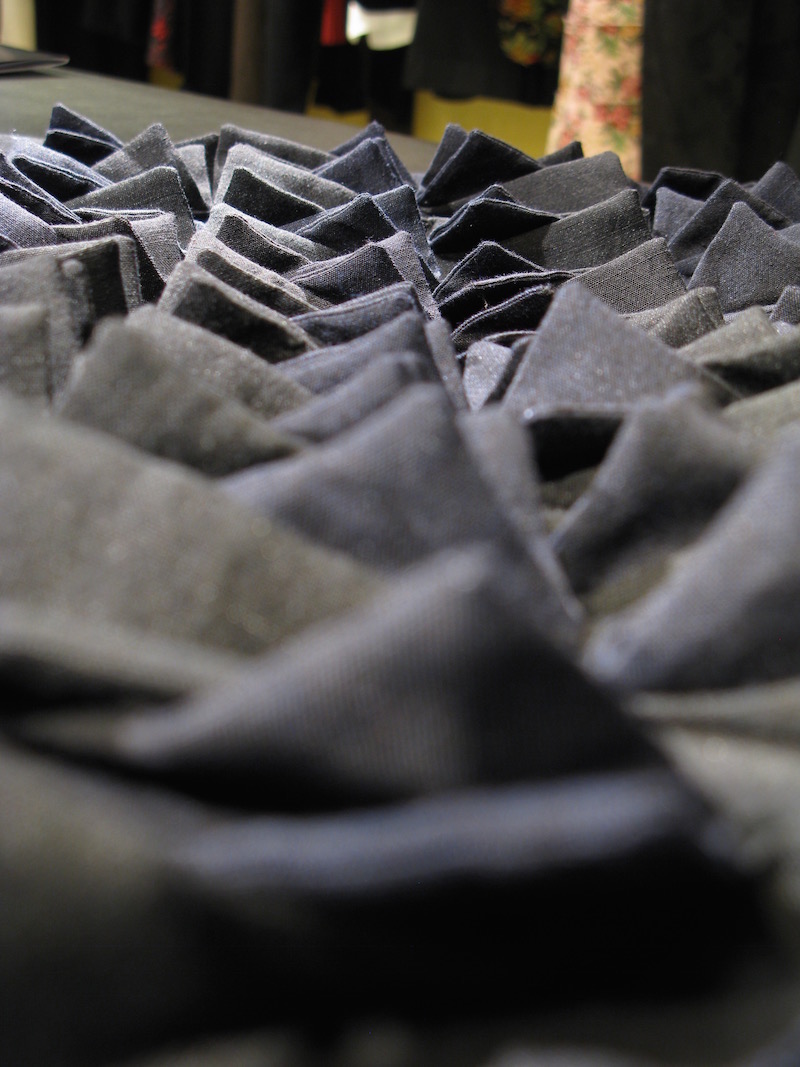
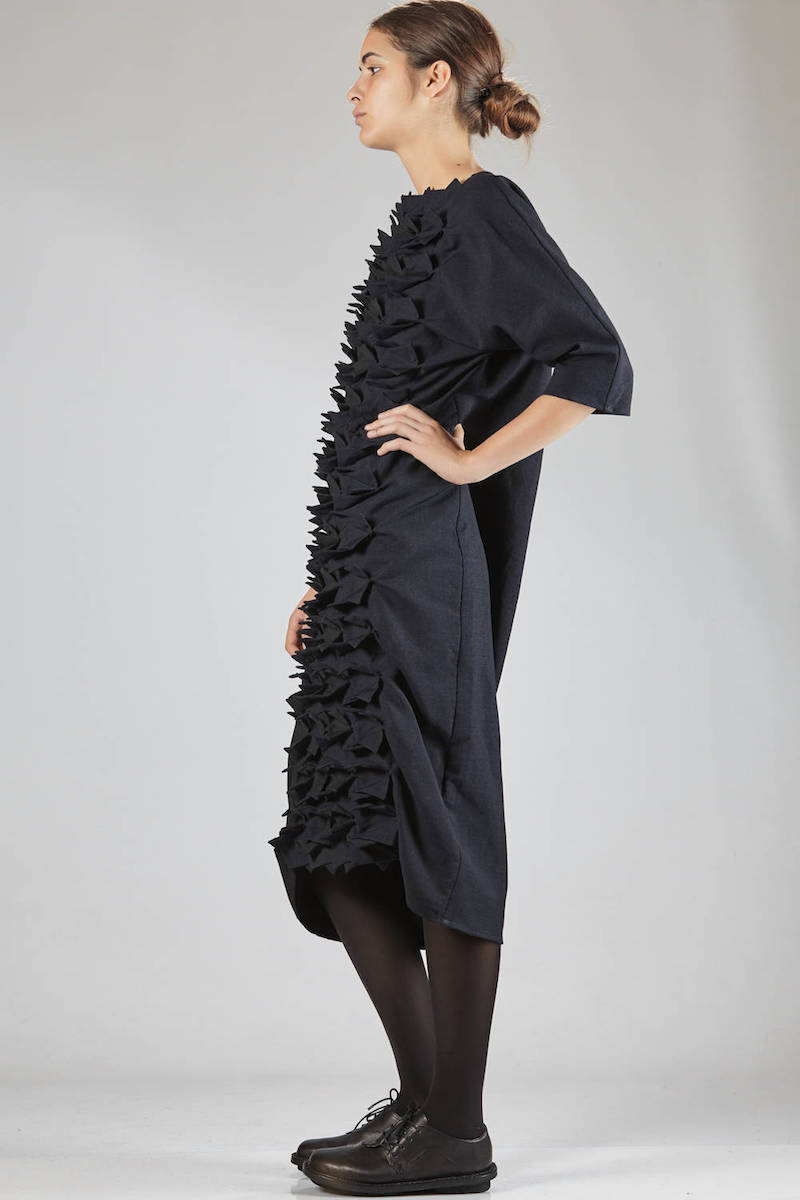
In the ORIGAMI DRESS, the concept underpinning the production — strips of fabric assembled three-dimensionally — and the cut of the garment were designed in parallel, and as a result the front of the dress is a compact modular system in which all parts are interconnected. In addition, the very dry and lightweight wool/linen canvas fabric chosen specifically for the dress can be doubled up, making it ideal for the origami-style folds. The resulting strength is an intrinsic part of the garment, within a simple yet sculptural shape.

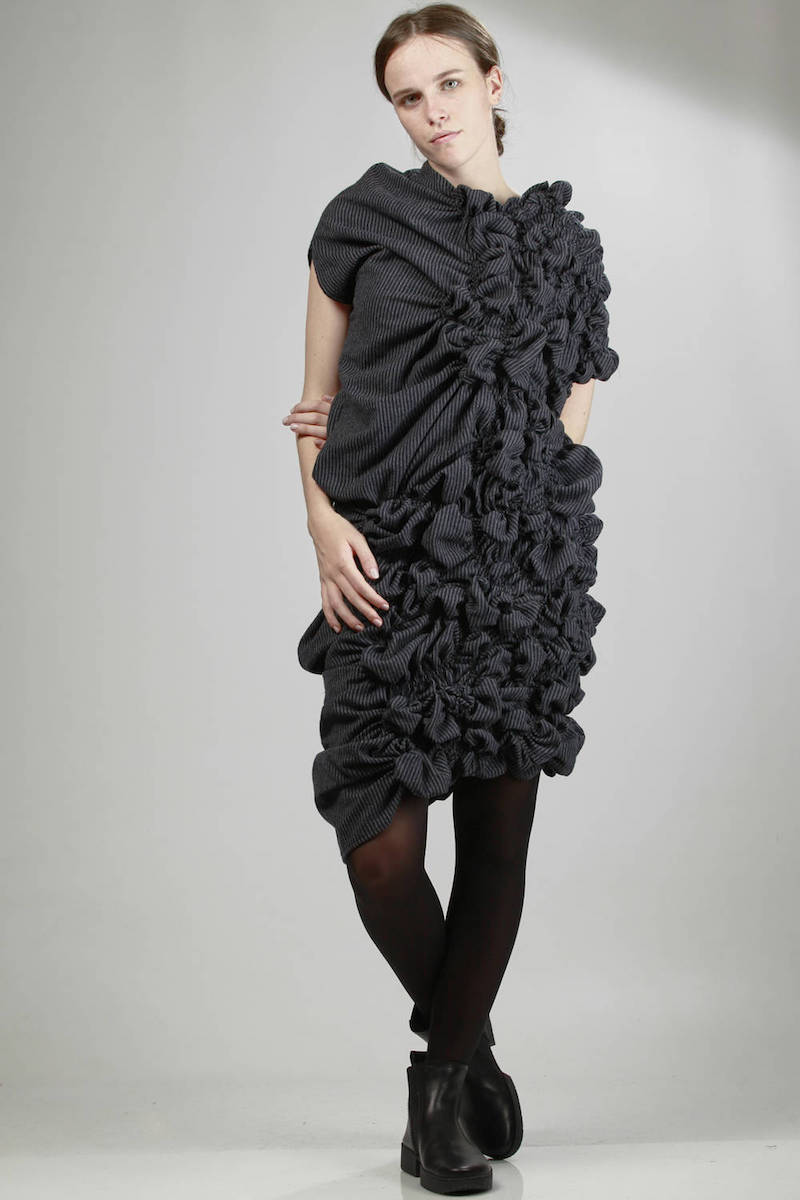
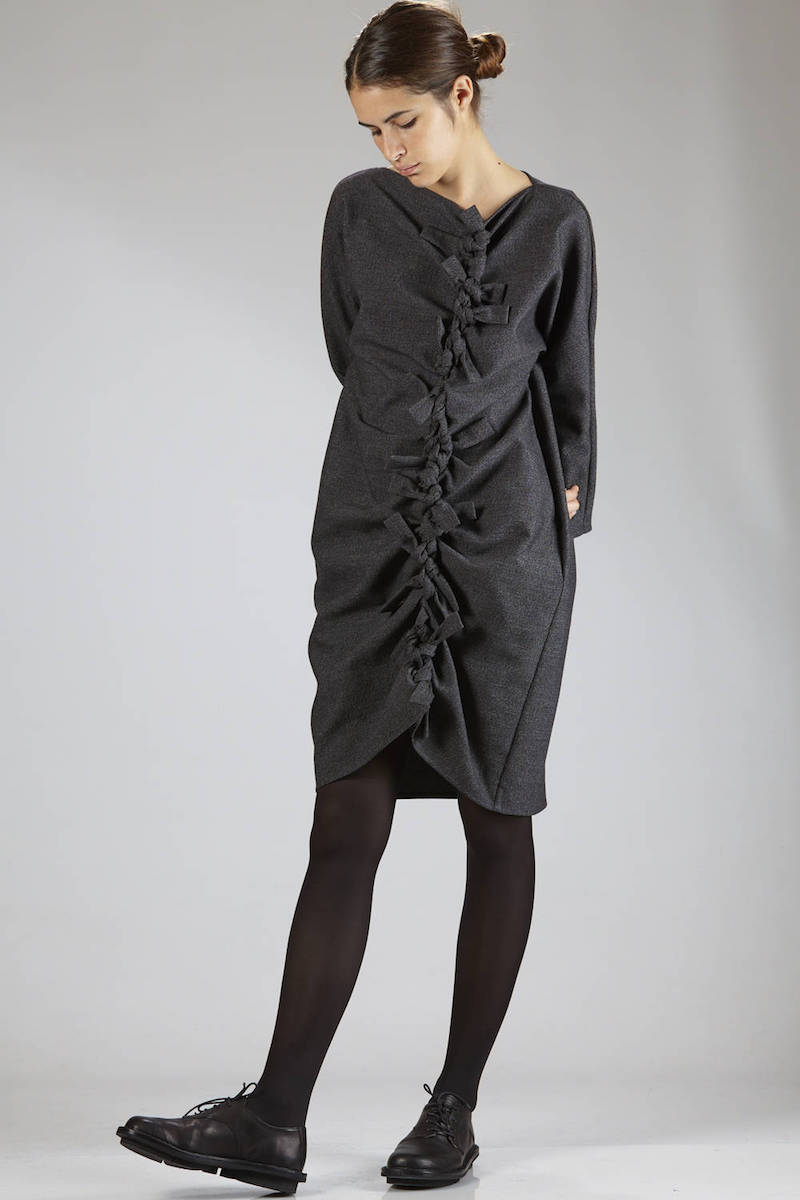
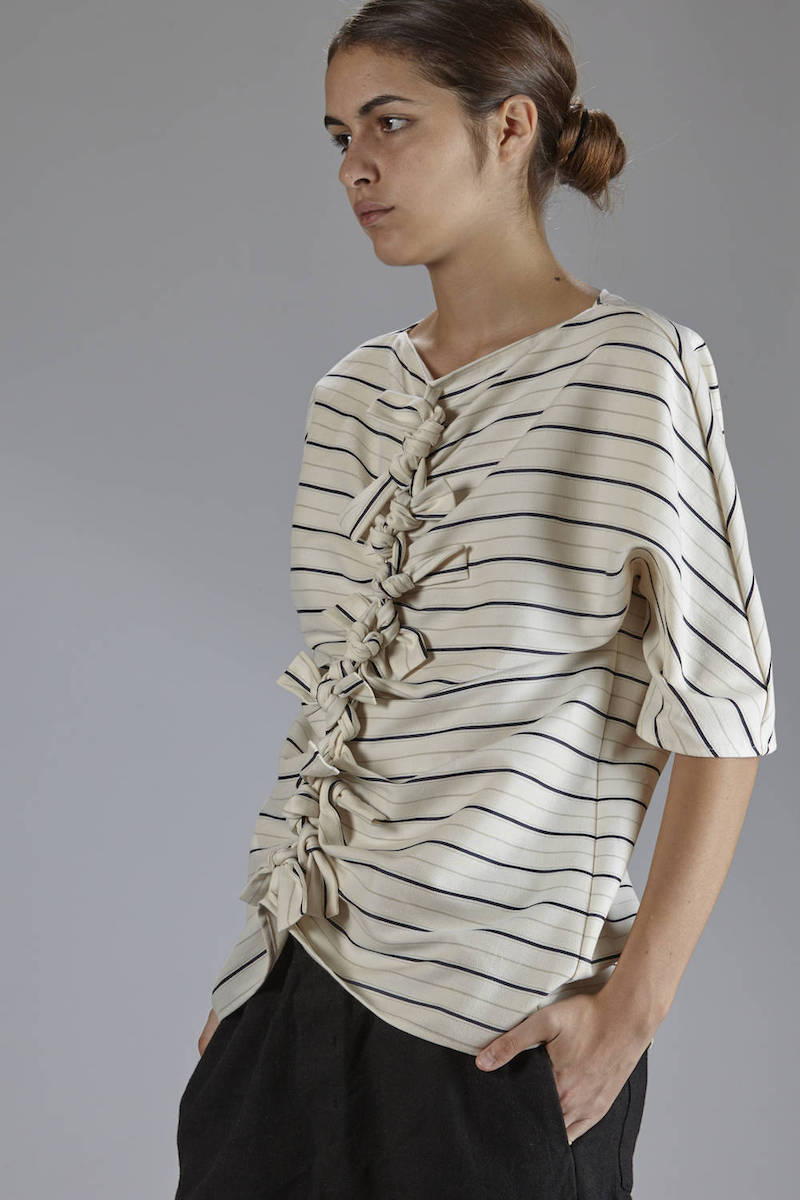
For the NODI DRESS, a special design was created with a structure that runs vertically through the dress: a sort of comb with teeth made of small strips of fabric. Only when the sewing is done and everything is completely finished are these strips tied by hand, and the dress slowly takes shape, taking on its final appearance thanks to a spine of knots and bows that gather the fabric in at the sides. Truly a captivating design!”

A made in Italy learned, who knows to confront the most daring challenges of the great Japanese school, knowing, however, to defend and define its own creative authenticity.


Read More
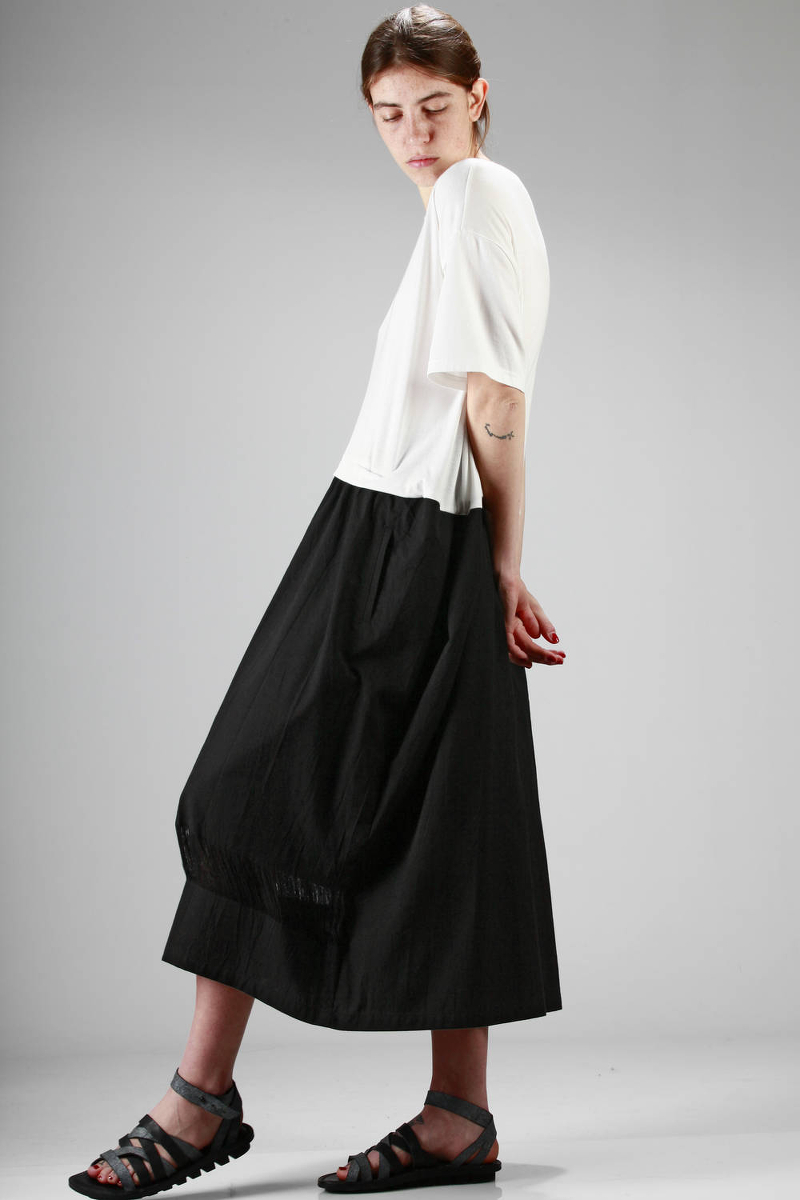
Summer Sale S/S 2016 Ivo Milan

With summer sales still pacing ahead and the first arrivals of the Fall/Winter 2016-2017, a fresh look to our current catalogue is an opportunity to bring summer back into the limelight. Heatwaves and imminent holidays demand light weights and outfits.

Together with Jennicka, Sari’s shots around our shop in Padova will take you on a swift tour of our Summer deals…


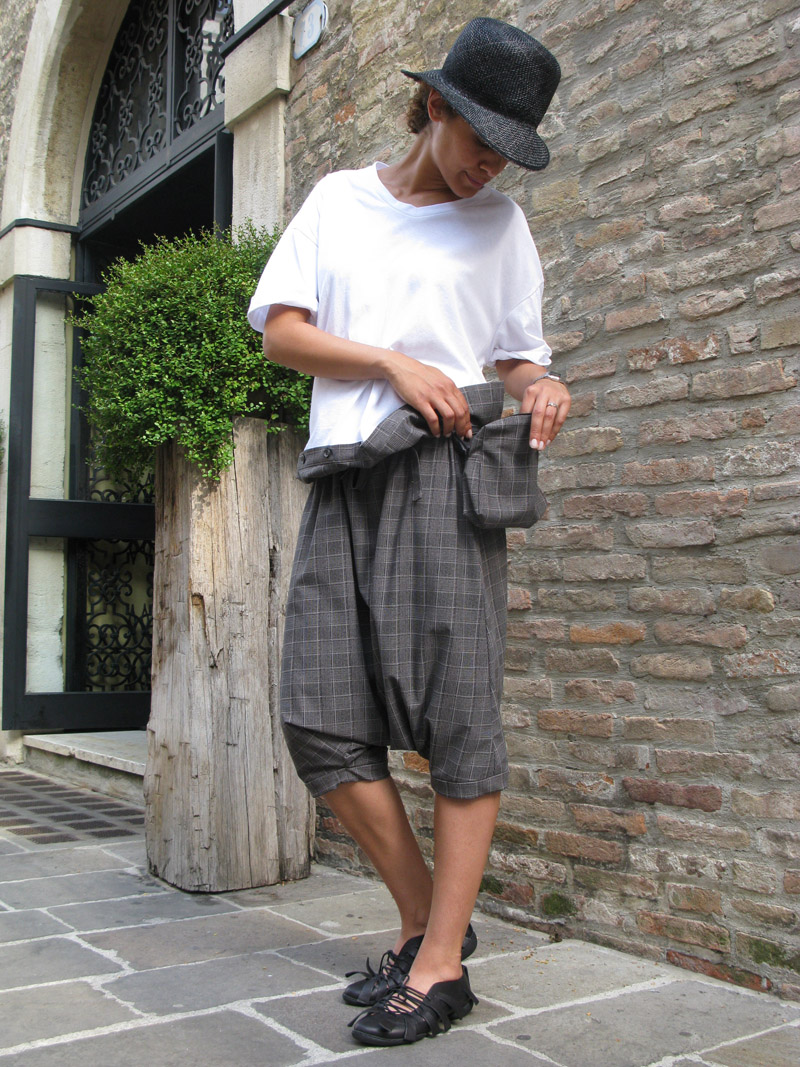
Y's Yohji Yamamoto trousers dress 2016

Y’s Yohji Yamamoto two pieces wide dress: wide t-shirt in cotton jersey, short sleeve, wide V neck, small buttons at the bottom to be closed in holes of the trousers, short sarouel in polyester and polyurethane Prince of Wales, with belt and detachable belt pouch, two welt vertical side pockets, t-shirt and trousers are detachable

Sha double sinamay hat with wider brim at sides and smaller at rear, small cotton ribbon trim at the edge

Trippen (SPIDER) flat shoe in soft cowhide leather with laces and side stripes, open on upper part, laces closure, leather stripes coming out from the sides suggesting a ‘spider’ design, two separated shells rubber sole


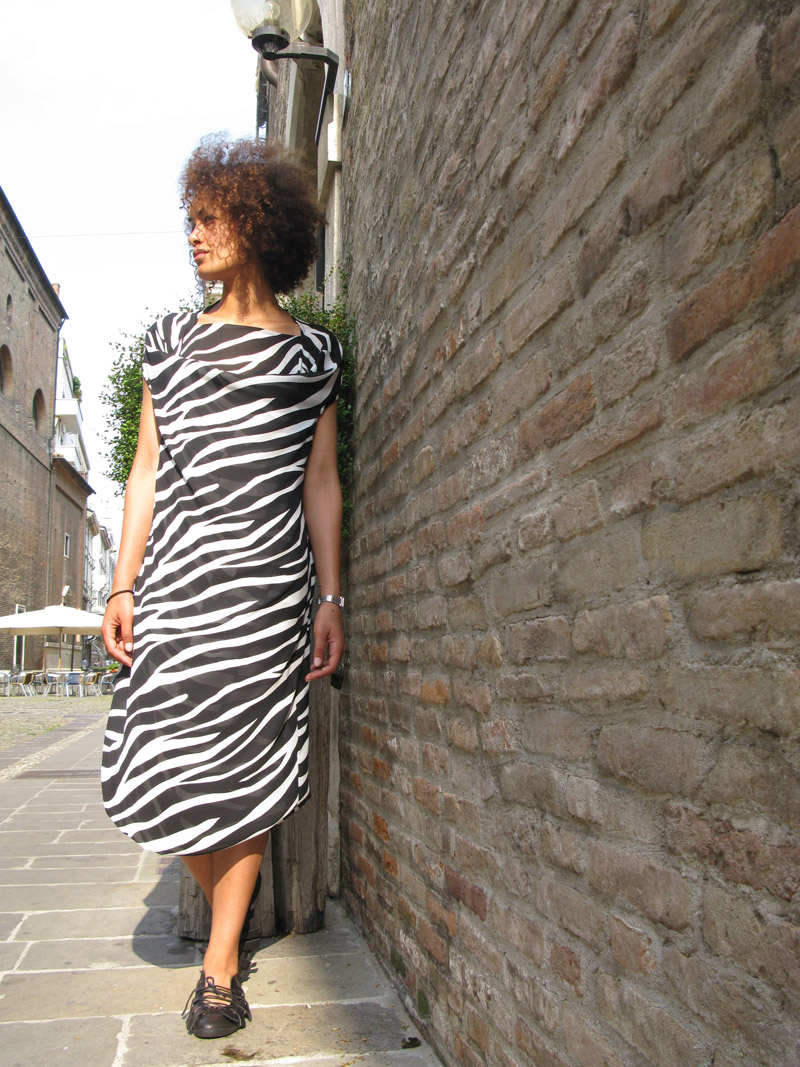
Junya Watanabe dress ss 2016

Junya Watanabe calf-length dress in polyester georgette with a zebra-stripes print, flared sleeve, wide rounded neck with a shawl effect on a second dress, back central slit, straight line

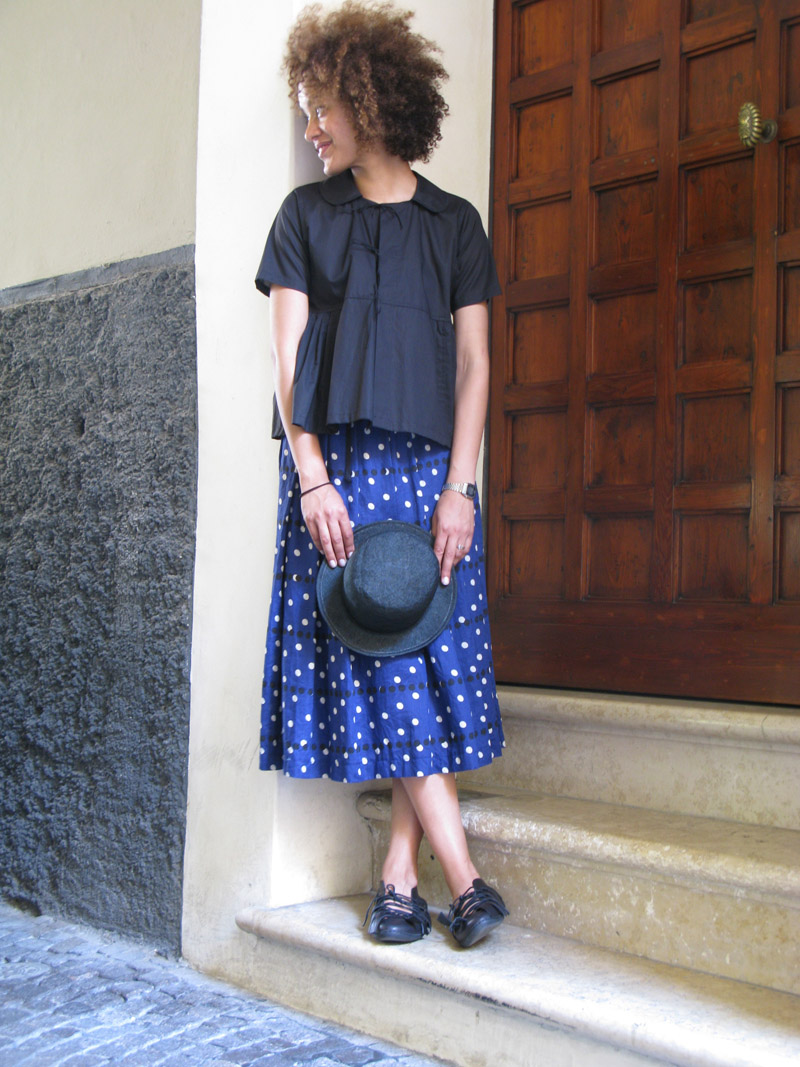
Comme des Garçons-Comme des Garçons outfit S/S 2016

Comme des Garçons-Comme des Garçons wide shirt in cotton poplin, cut with stitching and pleating ‘impero’ style, rounded neck, strings closure on the front, short sleeve, hip-length, wearable also as an open jacket

Comme des Garçons-Comme des Garçons long and wide pleated skirt in washed linen canvas and printed with bi-colour polka-dots, elastic and waist band at the belt, side vertical welt pockets


Un-Namable over-fitting t-shirt in iridescent cotton jersey, wide crew-neck, circle line, flared asymmetric bat sleeve with raw cut edges, central vertical stitching on the front and the back

Un-Namable soft trousers in cotton crêpe with narrow vertical pleats, diagonal small panel on the front, elastic at the belt, a side diagonal small pocket

Daniela Gregis big shopper bag in hand-knitted palm leaves wrapped in a cotton vichy canvas with knots going through four holes in the upper part becoming a double handle, the piece of cloth could be worn as a shawl, h cm 30 x l cm 32 x d cm 20

Trippen (IBIZA) flip flop sandal in soft elk leather and cowhide leather parts in contrasting colours, wide and asymmetric band wrapping a foot side, Velcro closure on the front, open on the back, classic rubber rounded sole


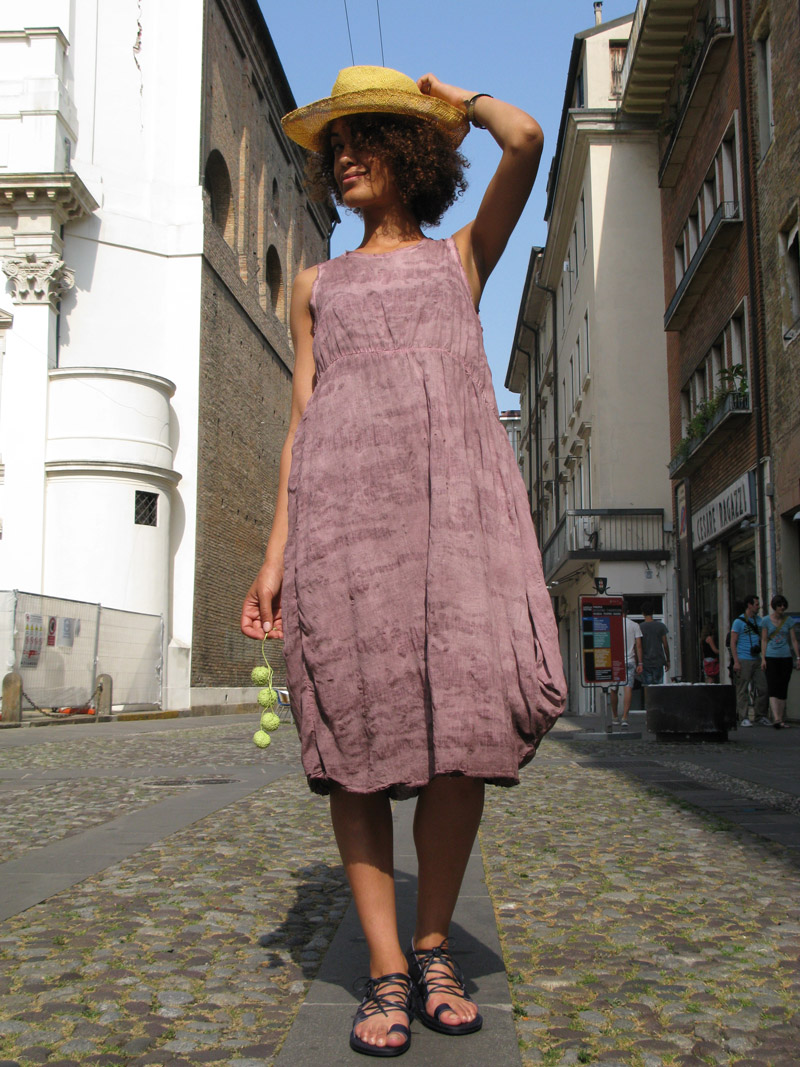
Un-Namable S/S 2016 dress

Un-namable calf-length doubled dress in treated cotton muslin and with a cloud effect printing, wide crew-neck, sleeveless, diagonal stitching at the waist, wide bottom with side stitching and selvage at the hem, raw cut edges, wide and asymmetric line

Yesey hat straw

Trippen (HOREN) flip flop sandal in soft cowhide leather along the edges with open-toe, separated flip flop ring, shoe laces twist along the foot upper part to be tied around the ankle, classic rounded rubber sole


Read More
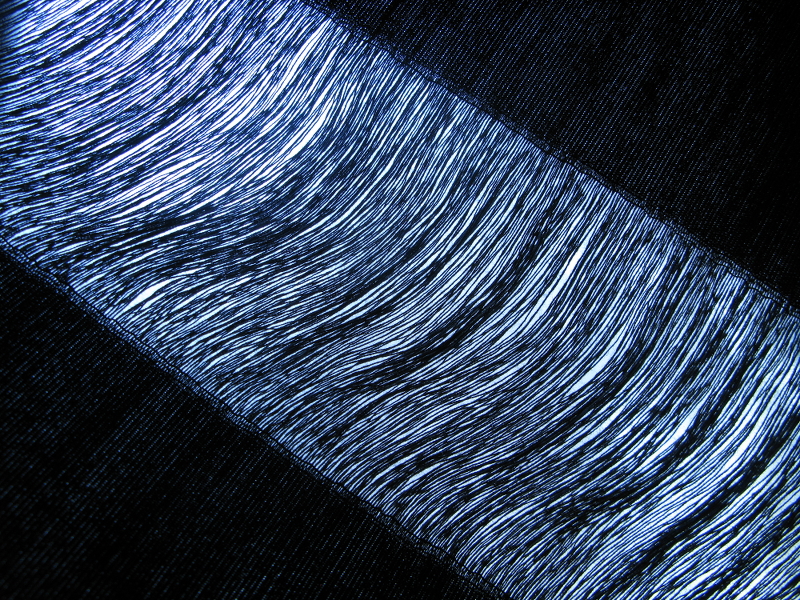
Y's Yohji Yamamoto Spring/Summer 2016

Maybe not everyone knows that before coming out with the line that now bears his full name, Yohji Yamamoto made his debut in 1972 with the Y’s. A possessive case strongly indicative of the paternity and affection feelings of the well-known Japanese designer towards his work and his young performance.

Y’s, in the true sense of ‘it belongs to Yohji’, could not then be considered today a second line, but instead an everyday alternative of the bolder stylistic codes reserved to the runway collections.

It is not a rare event that, in the wide Paris showroom in Rue Saint Martin, we find us facing the spoiler of choice between a fèmme piece or its Y’s similar, reflecting from time to time if privilege a more abstract and mature feminine interpretation or a more immature and practical one.

The final decision is usually commit to the more precise correspondence between shape, colour and composition, with the world evoked by the garment in question.

Y's Yohji Yamamoto Spring/Summer 2016 show-room

In the Y’s too, Yohji doesn’t scrimp on the involvement of distant artisans, last repositories of the rich Japanese textile heritage, and with extraordinary confidence and discretion leads these unmissable knowledges in refining the everyday life. Linen and cotton patchworks, gussets kept together by laborious stitchings, polka-dots spread on complex wideness, doubled fabrics, barely sketched and overlapped pleats, ad hoc placed darts, precise distribution of the empties and the voids, in a continuos, careful game around the details, the small particular, in order to confuse the position of dresses, jackets and knitwear, in two opposing worlds: one classic and conventional and the other more unpredictable and personal.

The effect is a displacement typical of Yohji Yamamoto’s trait, always in conscious and affected balance between the austerity and the unconventional.

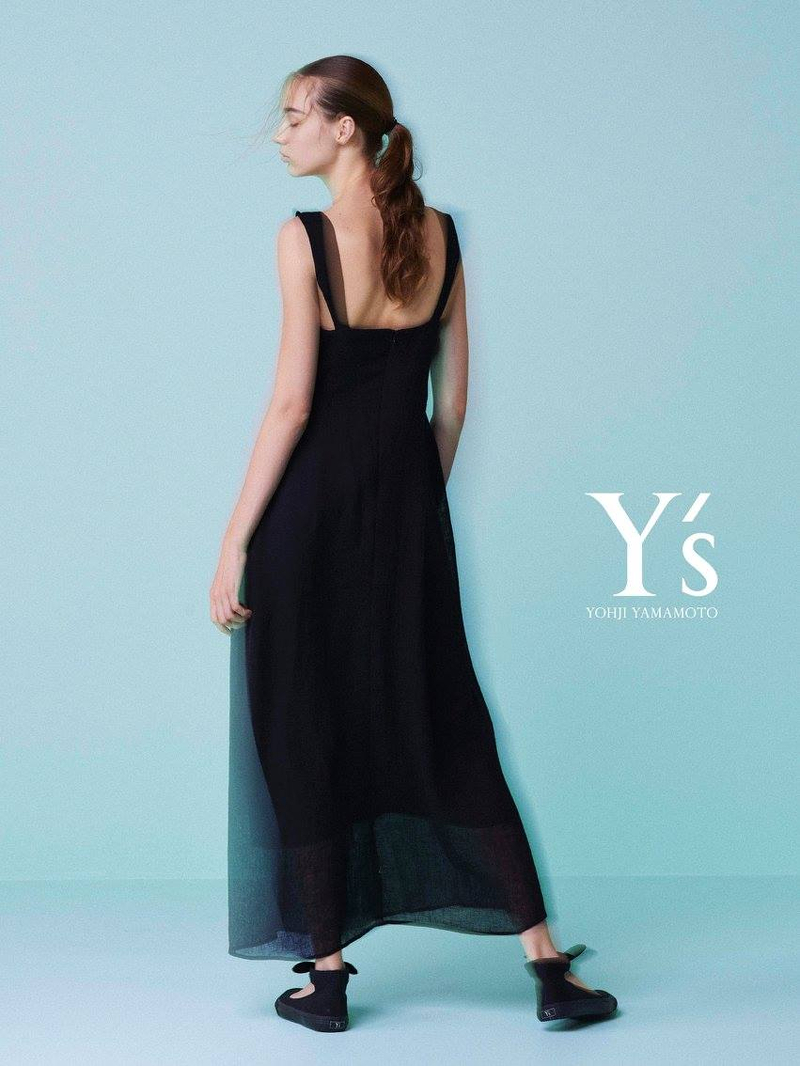
Y's Yohji Yamamoto dress Spring/Summer 2016

Y's Yohji Yamamoto Spring/Summer 2016 dress detail

Y's Yohji Yamamoto Spring/Summer 2016 jeans and pois shirt

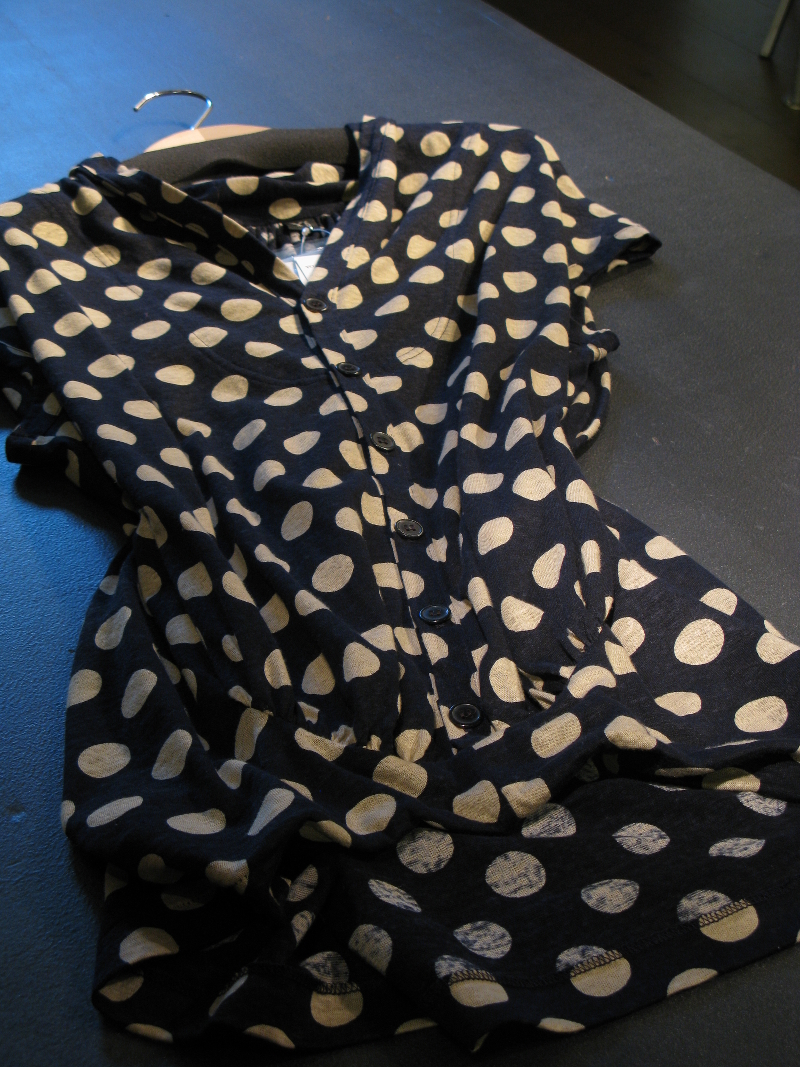
Y's Yohji Yamamoto Spring/Summer 2016 shirt pois

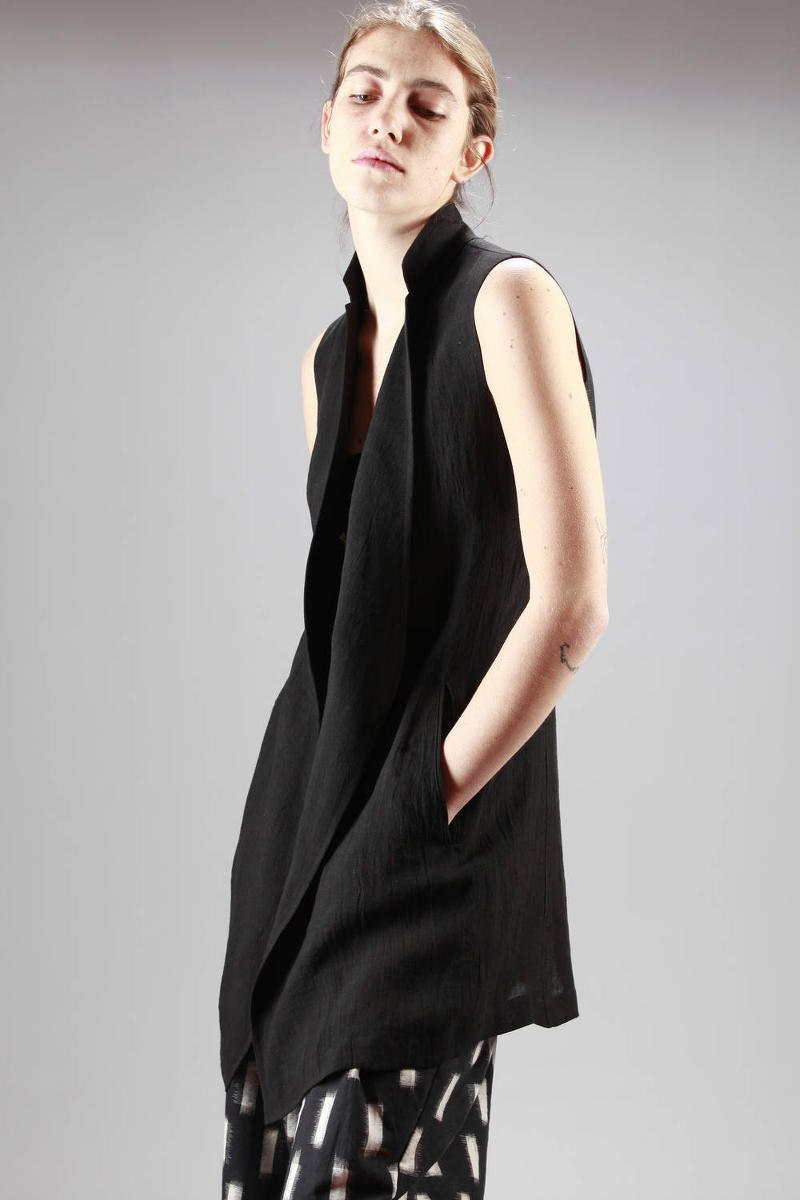
Y's Yohji Yamamoto Spring/Summer 2016 gilet

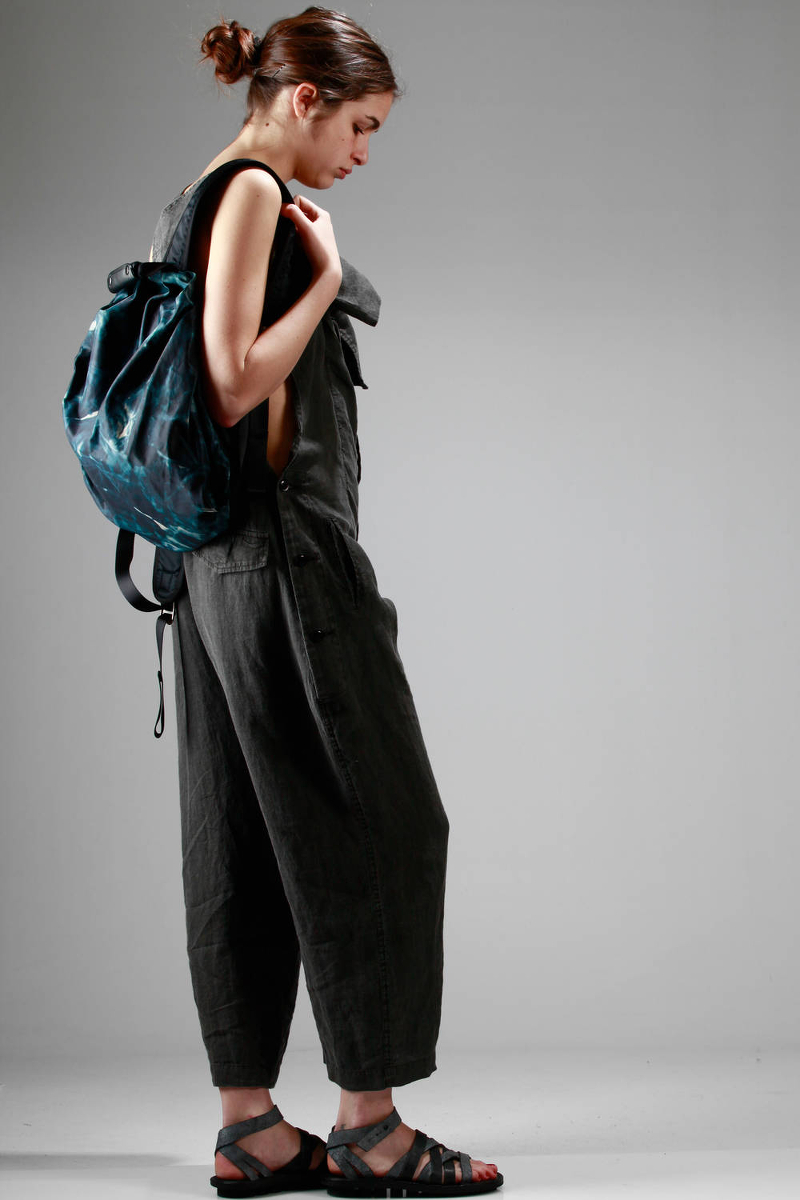
Y's Yohji Yamamoto Spring/Summer 2016 jumpsuit and back-pack

Y's Yohji Yamamoto Spring/Summer 2016 pants-dress

Y's Yohji Yamamoto Spring/Summer 2016 trousers

Y's Yohji Yamamoto Spring/Summer 2016 trousers detail

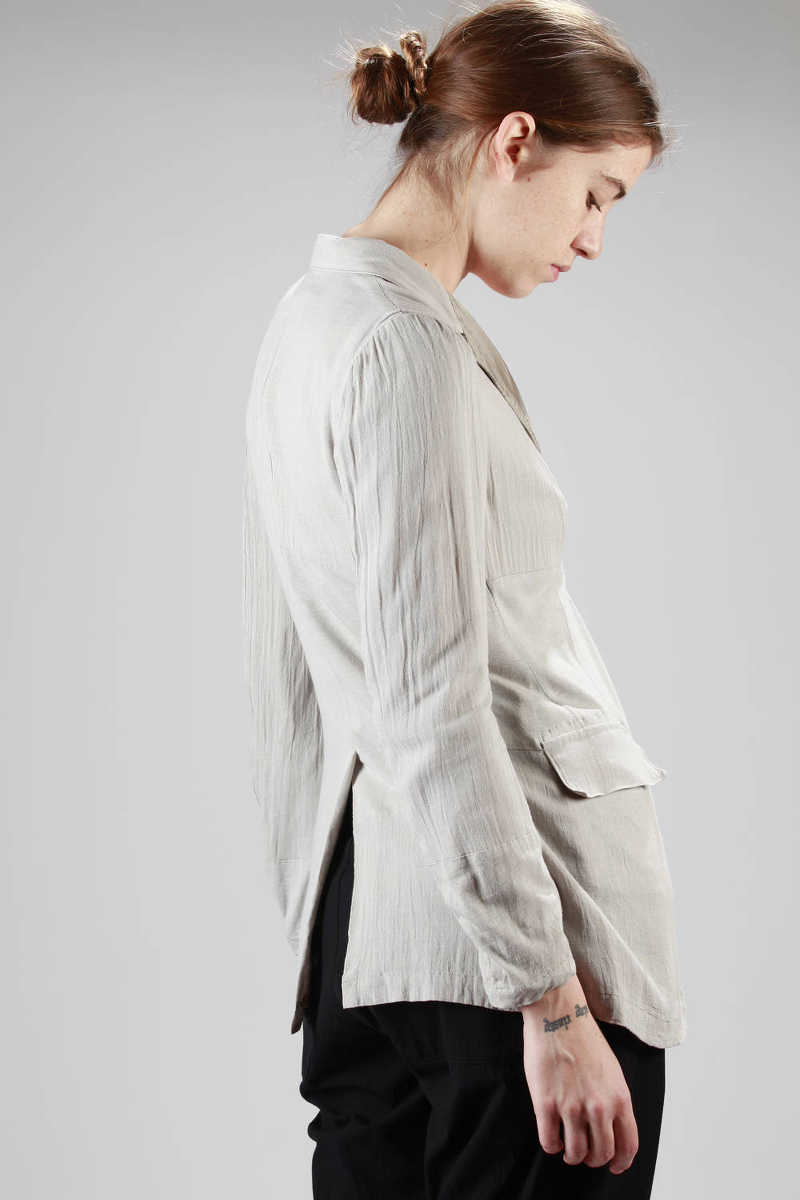
Y's Yohji Yamamoto Spring/Summer 2016 jacket

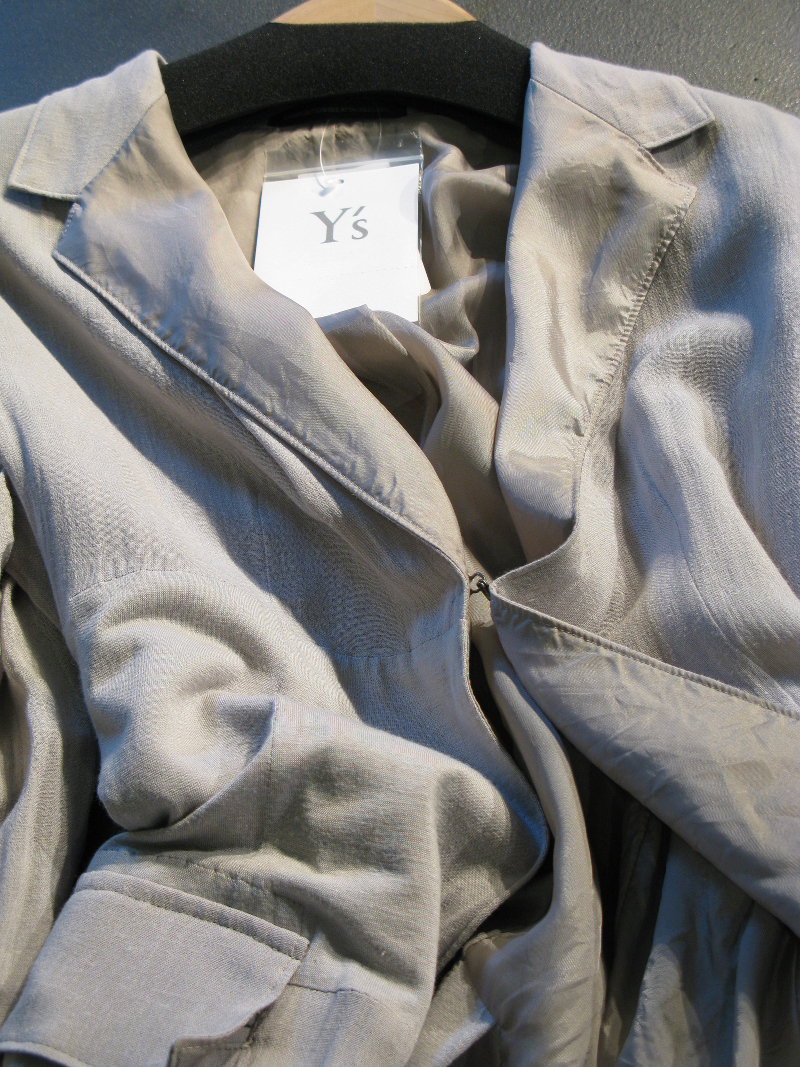
Y's Yohji Yamamoto Spring/Summer 2016 jacket detail


Read More
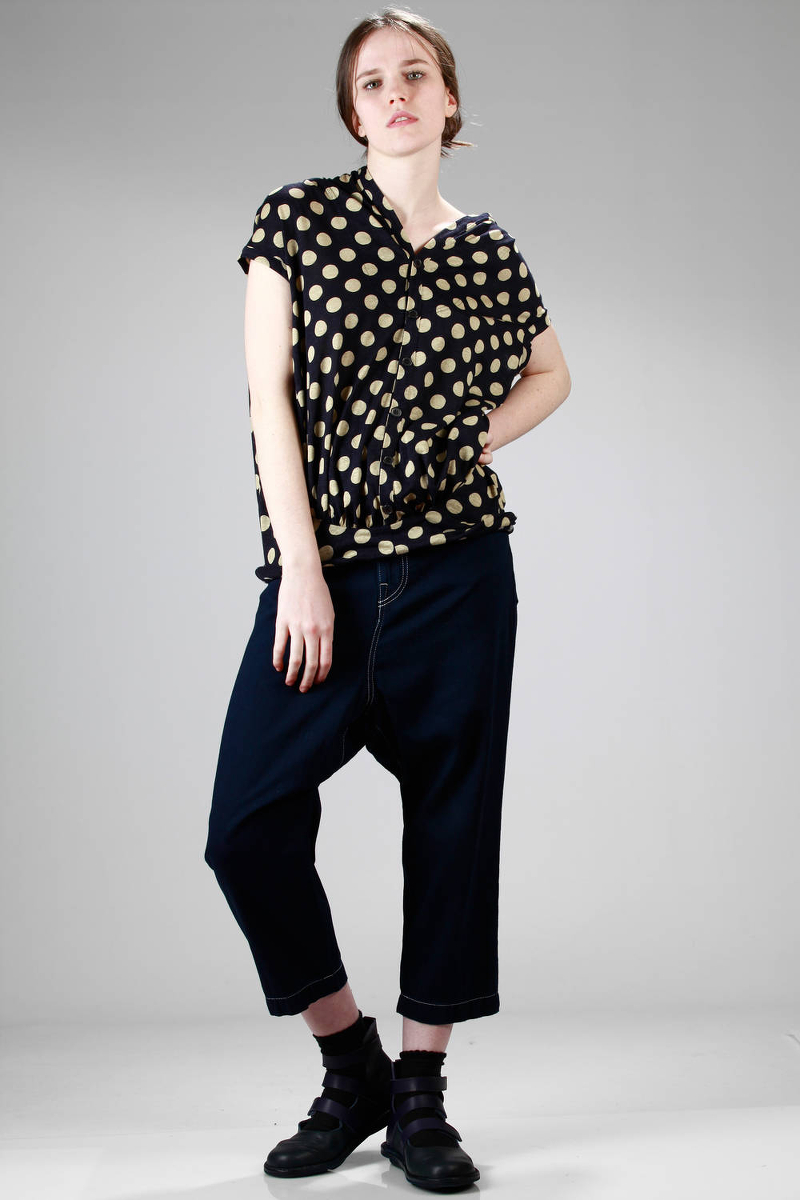
Looking closely at a garment of the the so-called Japanese school great master Yohji Yamamoto is not only a rare occasion, but the audience reaction is always the same too: silence and an expression that instantly changes the face, as if to say very simply: ‘Here we are behind’. Behind fashion, behind the seasonal trends, behind what one could usually see, behind the widespread boredom of making clothes with approximation.

In increasingly critical times for the clothing field, where more and more less space is left to the know-how, where the production rhythms are more and more compromised by the minimizing of the costs and especially by the increasing of the manufacturing companies profit margins, having the chance to intercept a Yohji Yamamoto’s work is like finding relief in the middle of the most hazardous desert. Because the high quality tailoring, applied to accessible models and with an eloquent design, could excite on the same level of every other noble artistic expression. And Yohji, more than ever, is a skilled weavers of ancient knowledges and contemporary solicitations, gained in metropolitan contexts with an high concentration of relationships, contaminations and syncretism.
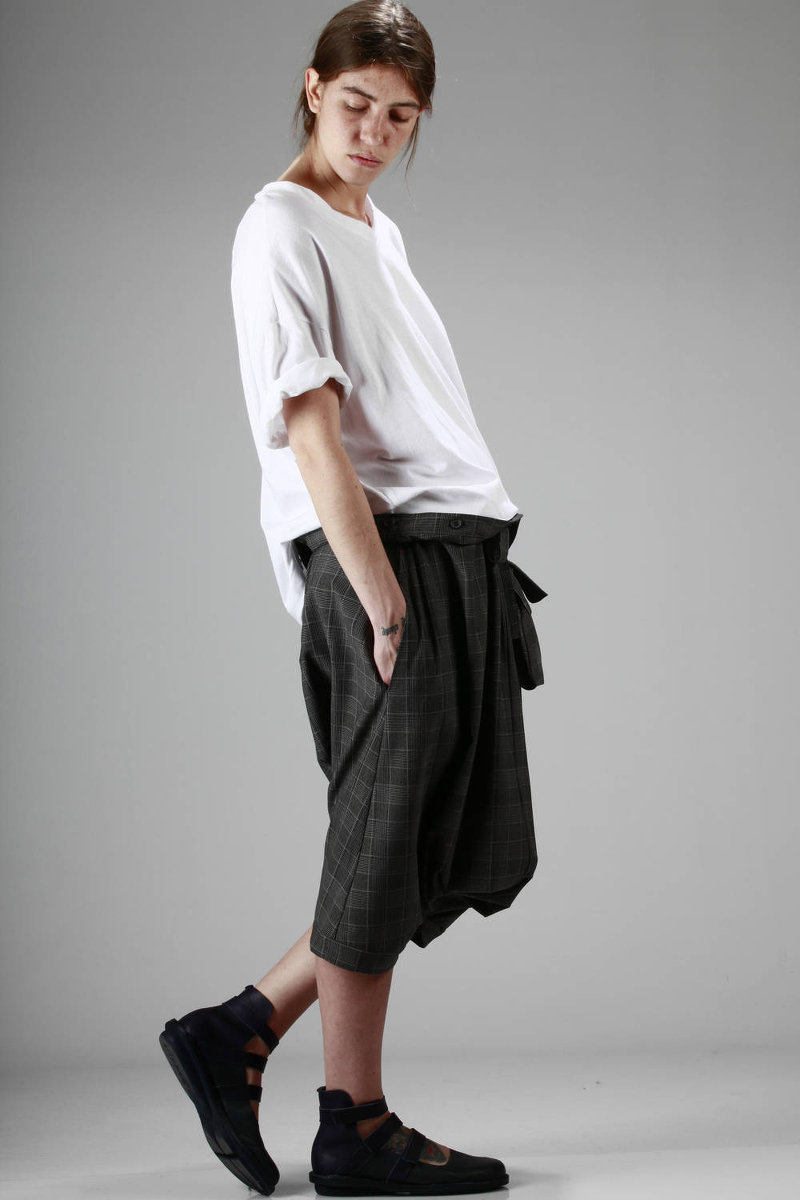
For the Spring/Summer 2016 we have a personal interpretation of an Enlightenment atmospheres, in the bustiers composed by articulated asymmetries on the wider volumes of skirt and trousers, emphasized by the sumptuous scenario of the Hotel de Ville in Paris, selected for the runway show.

But the historical citation mixes and confuses itself with more contemporary and urban silhouette, evoked with determination by the lengths and the details of the overcoats, in the calculated disorder of certain dresses and tops


and especially in the explicit collaboration with the very young painter Yuuka Asakura (discover her instagram and twitter profiles) called to paint her abstract works on the already very precious Japanese cottons.


The ubiquitous black colour gets dirty with pictorial signs with a charming chromatic involvement, inviting the audience to observe with calm and attention, to stop by, discovering also the less showy gestures in fibres that reveal themselves in their curate and surprising three-dimensionality.

In opposition to the more pressing and emerging requests of time and space compression, Yohji Yamamoto with the most discreet savoir faire, remembers us that the beauty could be still part of our stories, we just need to never stop seeking it.


The Spring/Summer Yohji Yamamoto collection is on www.ivomilan.com


Read More