www.ivomilan.it

   IVO MILAN – Radical Fashion Blog

Archive
2011 Yearly archive

A long time collaborator with Rei Kawakubo for Comme des Garçons, Junya is with no doubts the most attentive interpreter of the cyber metropolitan spirit of current urban cultures.

He is now one of the biggest stars in international fashion, able to astound with his unfailing ability to transform materials that make up and describe the present industrial landscapes into suggestions that inspire his collections. Steel threads, brass bits and pieces, plexiglass plates and fabrics for industrial use are modified and translated into sculptures that can be worn, signs of a time that is decoded by a complex intellectual project, rather than by transient products of mass business.

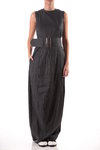
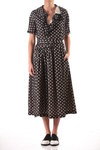
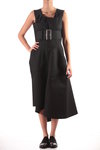
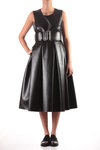
The expressive ability of the Japanese designer, however, is surprising even when he makes variations on his own inspirational standards. More than recalling futuristic and hyper-technological distressing moods of a modern megalopolis, the spring collection suggests the relaxing holiday mood of indefinite seaside resorts.

Faceless masks march on parade in a timeless moment, in spaces that are far from the daily frenzy, whilst the volumes fit with slowed down and light-hearted life rhythms.

The bodies, that are shaped in the usual complex female silhouettes, float in extremely light georgette fabric. The items of clothing are compositions of jackets, cardigans or simple shirts with draped skirts, made of different patterns and fabrics, or fresh summers skirts.

The navy blue and the recurring cream colour of the backgrounds outline seaside, summer moods, and imagination is carried away within the heat, the promises and the well-being of a season that is anticipated and longed for so much.

Read More

Think, put together then unmake and put together again, experimenting volumes and fabrics that must always be closely examined because nothing is as it appears, everything is something different.

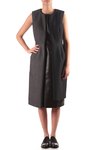
This seems to be the inspiration behind Rei Kawakubo’s new collection which, as usual, does not simply propose new trends for the current season, but complex creative works. The clothes are not presented for what they are, definite and completed items ready to be worn, but are rather abstract patterns to be repeated, superimposed, reversed and matched.

Skirts, shirts, jackets or waistcoats, every item of clothing is a sort of replicant that cannot be got rid of, that takes form and emerges from anywhere. The edge of a lapel, the stitching of a shoulder, the bottom of a skirt or of a pullover, the back of a dress are all possible places where another element can be put.

Comme des Garçons performs a sort of metalanguage of fashion, where the analysis and description of the process of the mind, which leads to concrete production, are revealed and suggested. Such an operation, that might have potentially obsessive and inflated results, is incredibly able to make up a poetic entirety that is generally harmonious, despite the centrality of asymmetrical lines.

Thanks to masterly tailoring and aesthetic skills, the imbalance of colours and volumes is translated into balanced solutions, whilst the urge to exceed is diluted by more severe pieces, where the creativity of the designer is shown by the fabric processing, for example the cotton that looks like skin.

This collection requires time and attention to detail, because, as we have already mentioned, nothing is as it seems.

Many pieces offer the possibility of being worn in different versions, thus enormously increasing the number of items of clothing.


Gallery

Read More

Yohji Yamamoto S/S 2011

The soundtrack of Yohji’s fashion show is a clear evidence of the inspiration for the current season. Jimi Hendrix’s rock, 40 years after his premature death, sets up the rhythm of the show, synchronizing the beats of the sound with the colours and lines on the catwalk.

The rocker woman created by Yamamoto, however, hasn’t got anything to do with the shabby look that was typical of young sub-cultures of the seventies. Far from any predictable stereotypes and banal suggestions, the collection proposes items that conform to the very high creative standards of the Japanese designer: excellent tailoring, asymmetrical cuts, refined and complex fabrics.

Such an artistic verve can even propose an inflatable skirt made of transparent vinyl, with buttons and pleats that create a plisse effect. Even if every item of clothing is presented with heavy boots or light sandals, it is without the intention to underline urban environments and moods, but instead to set clothes in everyday life that would otherwise belong to the exclusive world of haute couture.

Always unpredictable, Yamamoto is one of the most significant forerunners of the so called Japanese school, and is currently being displayed at the prestigious Victoria & Albert Museum, in London. An occasion to understand and follow the development and main topics of the aesthetic vision of a revolutionary fashion genius, whose creations are considered to be real works of art that must be displayed and made public, at least for as long as an exhibition lasts.

Read More

Ancora una volta Rey Kawakubo ci riesce a stupire trovando nuovo modo di decostruire gli indumenti più elementari e di trasformarli in opere d’arte.

Nel video seguente, un breve estratto della sfilata di Parigi in cui veniva presentata la nuova collezione Primavera-Estate 2011.


Read More

Yohji Yamamoto at the V&ANext spring the V&A will open the first UK solo exhibition celebrating the life and work of Yohji Yamamoto, one of the world’s most influential and enigmatic fashion designers. This installation-based retrospective, taking place 30 years after his Paris debut, will feature over 80 garments spanning Yamamoto’s career. The exhibition will explore the work of a designer who has challenged, provoked and inspired the fashion world.

Read More